


Best Non Toxic Workout Shirts 2026: PFAS-Free Picks
Table of Contents
- Why Non Toxic Workout Shirts Matter in 2026
- What Makes Workout Shirts Non Toxic
- Best PFAS Free Athletic Clothing Brands to Know
- Benefits of Organic Cotton Workout Shirts
- Viscose From Bamboo: A Performance Alternative
- How to Identify High-Quality Non Toxic Workout Shirts
- Frequently Asked Questions
Last Updated: September 17, 2026
Why Non Toxic Workout Shirts Matter in 2026
Your skin is your largest organ, and it absorbs what you put against it. That simple fact is why so many men are rethinking what they wear to the gym. If you're searching for the best non toxic workout shirts 2026 has to offer, you're already ahead of the curve. This guide from Mellow Mile breaks down what actually makes a shirt safe, which certifications matter, and how to spot greenwashing before you spend a dime.

Most workout shirts on the market are built around polyester and chemical finishes designed to wick sweat and resist odor. The tradeoff is prolonged skin contact with synthetic treatments that many health-conscious buyers now want to avoid. Below, we'll show you exactly how to identify safer options, from fiber composition to third-party testing.
The shift toward non toxic workout shirts isn't a trend. It's a correction.
What Makes Workout Shirts Non Toxic
A non toxic workout shirt is one made without PFAS treatments, formaldehyde-based finishes, or other chemical additives that can linger against the skin. In practice, that means choosing fabrics and dyes that are verified by independent labs rather than trusting a "performance" label.
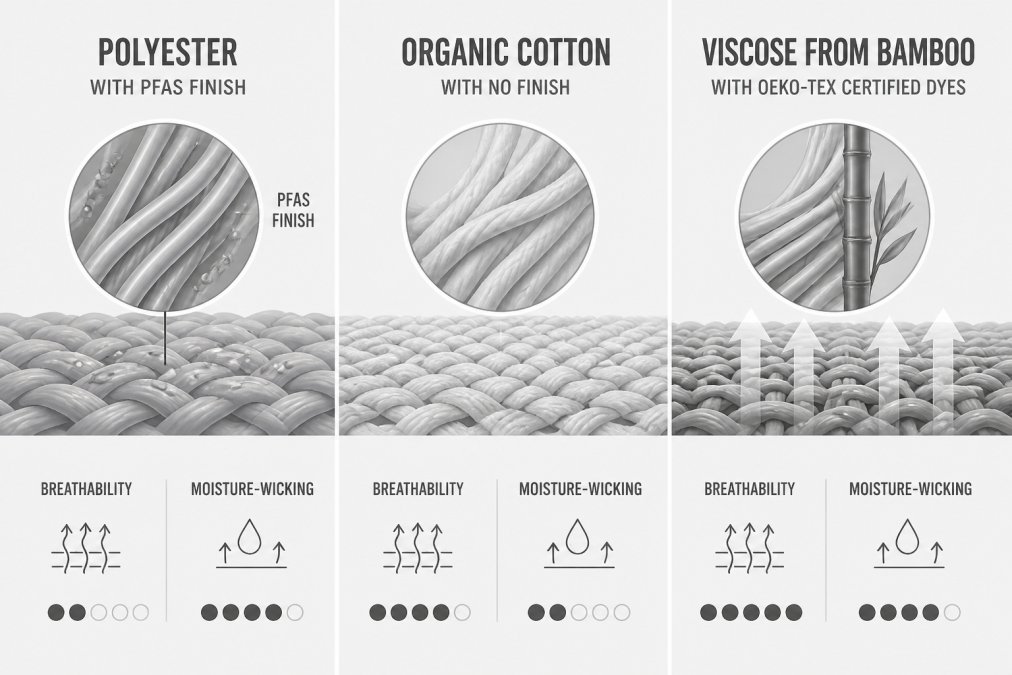
The distinction comes down to three things: the fiber itself, how it's dyed, and what finishes are applied afterward. A shirt can start with a clean fiber and still pick up chemical residue in finishing. That's why certifications matter as much as the material.
PFAS and Other Chemical Finishes to Avoid
PFAS (per- and polyfluoroalkyl substances) are a family of synthetic chemicals used to make fabrics stain-resistant and water-repellent. Many athletic brands have relied on them for decades because they resist both water and oil, which is exactly what a sweat-wicking finish is trying to do.
Watch for these finishes when you shop:
- Stain-repellent coatings
- "Wrinkle-free" or "no-iron" treatments
- Antimicrobial finishes added to fabric
- Formaldehyde-based resins used in some wrinkle resistance
The EPA's overview of PFAS chemicals explains why these substances have drawn regulatory attention. If a shirt's tag doesn't disclose its finishes, that's a red flag.
Why Sweat Changes the Equation
A finish that sits quietly on a dry shirt is a different story once you start training. Sweat, body heat, and friction all work together on the fabric surface. Heat loosens the polymer structure of many finishes; moisture can carry dissolved compounds into closer contact with skin; friction from movement abrades the surface. That combination is why a shirt you'd never notice on a commute can feel different by mile four of a run.
This is also why "it's just a coating" undersells the issue. The relevant question isn't only what's on the fabric, it's how much of it stays put under the conditions you actually wear it in.
The Microplastic Angle Most Guides Skip
Most articles about non toxic activewear focus on chemical coatings. That leaves out a physical mechanism: synthetic fabrics shed microscopic fibers during wear and washing. Polyester, nylon, and elastane blends release these fragments through normal abrasion, the same friction that breaks down finishes.
Two things are worth separating here:
- Shedding during wear. High-intensity training, repeated stretching, and contact with equipment all abrade synthetic yarns. The fibers released are small enough to become airborne or transfer to skin.
- Shedding during washing. Mechanical agitation in a washing machine is a major release point for synthetic microfibers. How you launder a shirt affects how much it sheds over its life.
A practical takeaway: if reducing microfiber exposure is a priority for you, fiber choice matters as much as finish choice. A shirt built from a regenerated cellulosic fiber like viscose from bamboo behaves differently at the yarn level than a polyester performance knit.
Third-Party Certifications That Verify Safety
Certifications are the closest thing to a guarantee you'll get. Two matter most for workout apparel.
OEKO-TEX STANDARD 100 tests finished fabric for harmful substances (OEKO-TEX® STANDARD 100). When a shirt is made with OEKO-TEX STANDARD 100 certified fabric, the material has been screened against a published limit list. Class I is the strictest tier, tested against the limits used for baby articles.
GOTS (Global Organic Textile Standard) covers organic cotton from harvest through processing. A shirt made with GOTS certified organic cotton has documented organic fiber content and restricted chemical inputs.
Here's the honest caveat: GOTS does not cover viscose.
Best PFAS Free Athletic Clothing Brands to Know
Rather than chase a list of names, learn the criteria that separate genuinely PFAS-free athletic clothing brands from those using the phrase as marketing. The brands worth your money share a few traits: they disclose fiber content, they name their certifications, and they don't hide behind vague claims.
That's the standard to hold every brand to.
Benefits of Organic Cotton Workout Shirts
Organic cotton is a natural fiber grown without synthetic pesticides, and it's a strong choice for anyone with sensitive skin. The benefits of organic cotton workout shirts come down to what's not in them: no pesticide residue in the fiber, and fewer chemical inputs through processing. Organic cotton is better than traditional cotton.
Viscose From Bamboo: A Performance Alternative
Viscose from bamboo is a regenerated cellulosic fiber made through chemical processing, and it has become a popular alternative to polyester in athletic wear. It's soft, lightweight, and drapes well.
How to Identify High-Quality Non Toxic Workout Shirts
Spotting a genuinely safe shirt takes about thirty seconds once you know where to look. The label tells you most of what you need. But labels only cover the chemical side. The other half of the evaluation happens after the shirt arrives, under actual training load.
Reading Labels and Certifications
Start with fiber content, then check certifications, then look for finish disclosures. A shirt that names its fiber percentages and its testing standard is usually the real thing.
Use this quick checklist:
- Fiber content stated as a percentage
- OEKO-TEX STANDARD 100 or GOTS named specifically
- No "stain-repellent" or "antimicrobial" finish listed
- Dye process disclosed
- Care instructions that don't require dry cleaning
What to Ignore When Shopping
Ignore vague words. "Eco-friendly," "green," and "clean" mean nothing without a certification behind them. And ignore any brand that won't tell you what's in the fabric.
The Performance Test Most Guides Skip
Run these four checks on any shirt you're considering:
1. The sweat load test. Wear it for a hard 45-minute session, intervals, a heavy lift, or a long run in warm weather. Note three things: how quickly it saturates, whether it clings at the mid-point, and how it feels in the last ten minutes. A cellulosic fiber like viscose from bamboo tends to feel soft and breathable at the start; the question is whether it still moves with you when it's wet.
Matching the Shirt to the Session
Not every workout needs the same shirt. A few honest trade-offs:
- Heavy sweat, high heat: Prioritize breathability and quick dry-down. Lighter weights and higher cellulosic content tend to win here.
- High-impact and lifting: Prioritize fit and stretch recovery. A small percentage of elastane helps the shirt hold shape through repeated cycles.
- Long sessions with chafe risk: Prioritize seam placement and surface feel. Flat seams and softer fiber surfaces reduce friction points.
- Recovery or casual wear: This is where a viscose from bamboo tee is at its best, soft, breathable, and comfortable against skin for hours.
A Note on Care and Longevity
How you wash a shirt affects both how long it lasts and how much it sheds. Cold water, a gentle cycle, and air drying preserve fiber structure better than hot water and high-heat drying. For cellulosic and natural fibers, hang drying also protects fit. Skip fabric softener, it leaves a residue that builds up on the fiber surface and can reduce breathability over time.
Frequently Asked Questions
What is the best non-toxic fabric to wear for workouts?
Organic cotton and viscose from bamboo are two of the best options for non-toxic workout shirts. Organic cotton is a natural fiber grown without synthetic pesticides, and it breathes well during moderate activity. Viscose from bamboo offers a soft, lightweight feel with natural moisture-wicking properties. Look for fabrics that are PFAS-free and dyed with OEKO-TEX certified dyes to minimize chemical exposure. Avoid polyester blends treated with synthetic finishes when possible.
How do I know if a workout shirt is actually PFAS-free?
Check for third-party certifications like OEKO-TEX STANDARD 100, which tests for harmful substances including PFAS. Brands that publish test results or certification details are more trustworthy than those making vague claims. You can also look for language like 'formaldehyde-free' and 'PFAS-free' on the label. If a brand cannot provide documentation, treat the claim with caution. Mellow Mile's Athletic Tee uses OEKO-TEX certified dyes and is made without PFAS finishes.
Are synthetic fabrics in workout clothes considered toxic?
Synthetic fabrics like polyester are not inherently toxic, but many are treated with chemical finishes such as PFAS for stain resistance and moisture management. The concern is less about the polyester fiber itself and more about the chemical treatments applied to it. Choosing PFAS-free alternatives reduces your exposure.
What should I look for in non-toxic workout shirts for sensitive skin?
For sensitive skin, prioritize shirts made from organic cotton or viscose from bamboo, which are softer and less likely to cause irritation than synthetic fabrics. Check for OEKO-TEX STANDARD 100 certification, which verifies the fabric has been tested for harmful substances. Avoid shirts with chemical dyes or finishes. Mellow Mile's Athletic Tee is made with 95% viscose from bamboo and 5% elastane, and customers with sensitive skin report zero irritation after switching.
Finding workout gear that performs without chemical finishes takes more label-reading than it used to. Mellow Mile makes that easier with small-batch Athletic Tees built from viscose from bamboo, dyed with OEKO-TEX certified dyes, and designed to feel good against your skin from slow mornings to hard training. Sign up for 20% off and see the difference intentional materials make.