


Is Organic Cotton Worth It for Gym Wear? An Honest Review
Table of Contents
- The Real Question: Is Organic Cotton Worth It for Gym Wear?
- Organic Cotton vs Polyester for Gym: A Head-to-Head Comparison
- The Moisture-Wicking Limitation Nobody Talks About
- What to Look for in the Best PFAS Free Athletic Clothing Brands
- Care and Longevity: How to Make Organic Cotton Gym Wear Last
- Microplastic Shedding: The Comparison Synthetic Brands Avoid
- Verdict: Who Should Choose Organic Cotton for the Gym?
- Frequently Asked Questions
Last Updated: September 25, 2026
The Real Question: Is Organic Cotton Worth It for Gym Wear?
Ask ten guys at the squat rack whether organic cotton belongs in the gym and you'll get ten different answers. Here's the honest one: it depends on what you're doing and how much you sweat. This guide from Mellow Mile breaks down the trade-offs so you can decide for yourself.

Most guides push organic cotton as the obvious upgrade. Fewer explain where it falls short. A cotton tee holds sweat against your skin longer than polyester does, and that matters during high-intensity training. But the fabric you wear against your skin for hours matters too, especially if you've had irritation from synthetic finishes.
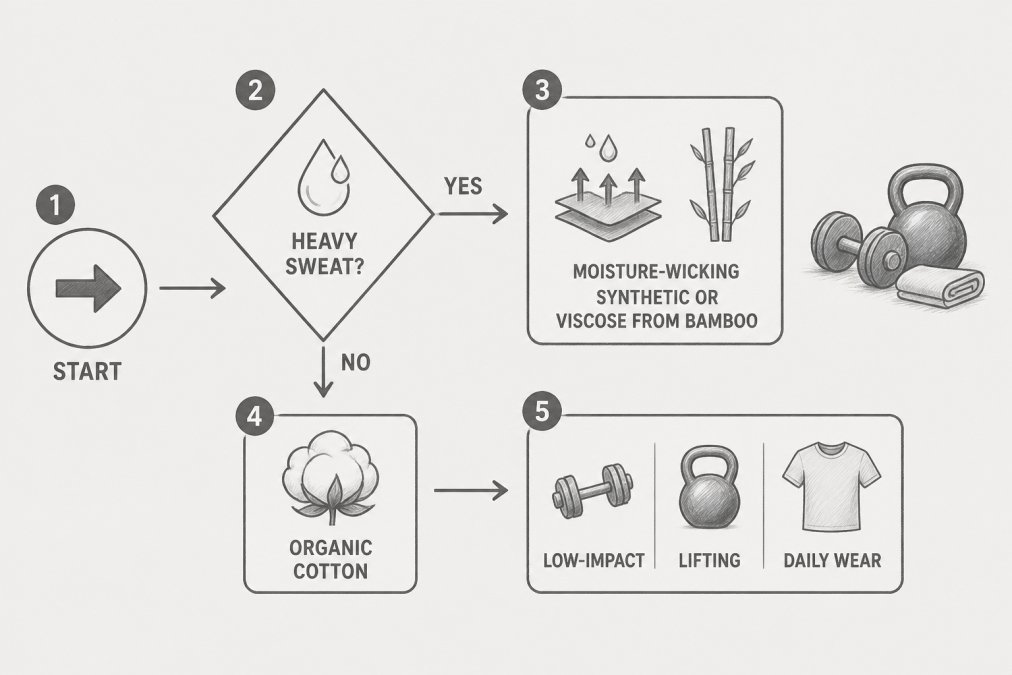
So is organic cotton worth it for gym wear? For low-impact exercise, lifting, and everyday wear, yes. For marathon training in July, probably not on its own.
Organic Cotton vs Polyester for Gym: A Head-to-Head Comparison
The two fabrics solve different problems, and the difference starts at the fiber level. Organic cotton is a natural fiber built from cellulose. Polyester is a synthetic polymer, usually polyethylene terephthalate, extruded into filament yarn. That structural difference drives every performance gap below.
Neither is "better" in every category.
| Feature | Organic Cotton | Polyester |
|---|---|---|
| Fiber type | Natural (cellulose) | Synthetic (petroleum-based polymer) |
| Breathability | High, air moves through the yarn structure | Moderate, tight filament weave traps air |
| Moisture handling | Absorbs and holds sweat | Wicks sweat to the surface for evaporation |
| Dries quickly | No, can stay damp for hours | Yes, often within 20-30 minutes of airflow |
| Durability after 50 washes | Good, with some softening and possible pilling | Excellent shape retention, but pills and snags |
| Microplastic shedding | None, natural fiber | Significant, every wash releases fibers |
| Skin sensitivity | Low irritation for most people | Potential irritation from dyes and finishes |
| Odor retention | Moderate, cotton holds odor until washed | Higher, polyester traps oils that bacteria feed on |
Breathability and Moisture Management
Organic cotton moves air well because its fibers are short, staple-length, and twisted into yarn with tiny gaps between them. Those gaps let heat escape, which is why a cotton tee feels cooler than a polyester one at rest and during light activity.
Durability and Fiber Integrity After Repeated Washes
Cotton fibers break down with repeated washing, especially in hot water and a hot dryer. Heat and mechanical agitation cause the short staple fibers to migrate to the surface, where they tangle into pills. Hot water also relaxes the yarn, which is why cotton garments shrink and lose shape over time.
The Moisture-Wicking Limitation Nobody Talks About
Organic cotton does not wick moisture. It absorbs it. That single fact explains most of the complaints people have after switching from synthetics.
Three ways to work around it:
- Choose a viscose from bamboo blend for better moisture handling
- Save cotton for low-impact sessions and everyday wear
- Change out of a soaked shirt promptly after training
What to Look for in the Best PFAS Free Athletic Clothing Brands
PFAS, short for per- and polyfluoroalkyl substances, are chemical compounds used in some textile finishes for water and stain resistance. Many shoppers now look for PFAS free athletic clothing to reduce skin exposure.
Certifications That Actually Matter (GOTS, OEKO-TEX)
GOTS (Global Organic Textile Standard) covers organic fiber content and processing for cotton. Look for "made with GOTS certified organic cotton" on the label.
Care and Longevity: How to Make Organic Cotton Gym Wear Last
Most guides tell you to wash cold and hang dry. Few explain why, or how much it actually matters. Here's the mechanism behind each rule, plus the specific failure modes to watch for.
Why Cotton Pills, and How to Slow It Down
Pilling happens when short staple fibers work loose from the yarn and tangle into little balls on the surface. Three things accelerate it: heat, friction, and overloading the washer. A cotton tee washed with heavy denim or towels gets abraded against rough fabric, which pulls fibers loose faster than a gentle cycle would.
Why Cotton Shrinks, and How to Prevent It
Cotton yarn is stretched during manufacturing. Hot water and high heat relax that stretch, and the fabric contracts. Most shrinkage happens in the first two or three hot washes. Cold water keeps the yarn relaxed in its finished state, so the garment holds its size.
Why Shape Loss Happens, and How to Avoid It
Elastane is what gives a cotton blend its stretch and recovery. Heat breaks down elastane faster than it breaks down cotton, which is why a stretched-out neckline or sagging waistband is often the first sign of heat damage, not fiber wear. Tumble drying on low still exposes elastane to sustained heat. Air drying avoids it entirely.
A Care Routine That Actually Extends Life
- Wash in cold water on a gentle cycle
- Skip fabric softener, it coats fibers and reduces breathability
- Hang dry or tumble on low; never high heat
- Wash with similar colors and similar fabric weights
- Turn garments inside out before washing to reduce surface abrasion
- Change out of sweat-soaked cotton within 30 minutes of training
How Much Longer Does This Actually Last?
A common pattern reported by long-term cotton wearers: a tee washed cold and air-dried holds its fit and feel noticeably longer than the same tee run through a hot wash and hot dryer cycle. The difference compounds, every hot cycle adds a little more shrinkage, a little more pilling, and a little more elastane fatigue. Cold wash and air dry is the single highest-leverage habit for getting years instead of months out of a cotton gym shirt.
Microplastic Shedding: The Comparison Synthetic Brands Avoid
Every wash of a synthetic garment releases microplastics into wastewater. Research on textile shedding continues to develop, but the pattern is clear: synthetic fibers shed, natural fibers do not.
Verdict: Who Should Choose Organic Cotton for the Gym?
Choose organic cotton if you lift, do yoga, walk, or want one shirt that works for the gym and the rest of your day. Skip it for marathon training or hot yoga, where you need fast moisture transfer.
Here's the honest breakdown:
| Your Situation | Best Choice |
|---|---|
| Lifting, yoga, low-impact | Organic cotton or viscose from bamboo |
| High-intensity training | Moisture-wicking synthetic or bamboo blend |
| Sensitive skin | Organic cotton, certified dyes |
| Long daily wear | Organic cotton boxers and tees |
Frequently Asked Questions
What fabric is best for gym wear?
The best fabric depends on your priorities. Polyester and synthetic blends dry fast and wick moisture, which suits high-sweat activities. Organic cotton gym wear offers breathability, comfort, and avoids the chemical finishes used on many synthetic fabrics. Viscose from bamboo is another option that feels soft and lightweight. For low-impact exercise or sensitive skin, organic cotton is a strong choice. For intense cardio where staying dry matters most, synthetics have the edge on moisture transfer.
What are the downsides of organic cotton?
Organic cotton absorbs moisture rather than repelling it, so it can feel heavy during high-intensity training or in humid conditions. It also dries more slowly than polyester. Some people find it shrinks slightly after the first dryer cycle, so hang drying helps preserve fit. Finally, organic cotton gym wear often costs more upfront than conventional synthetic options because of certified farming and processing. These trade-offs matter less for low-impact workouts or everyday wear.
How does organic cotton compare to synthetic moisture-wicking fabrics?
Synthetic fabrics move sweat away from your skin faster and dry quicker, which helps during intense sessions. Organic cotton absorbs sweat into the fiber, so it stays wet longer against your body. However, organic cotton is breathable and does not rely on the chemical finishes common in synthetic production. For low-impact exercise, yoga, or daily wear, organic cotton keeps you comfortable. For marathon training or hot yoga, a synthetic or viscose from bamboo option may perform better.
Is organic cotton better for sensitive skin during exercise?
Organic cotton is a natural fiber grown without synthetic pesticides, and it is often made with GOTS certified organic cotton, which restricts chemical inputs during processing. For people with sensitive skin, this can mean less irritation compared to synthetic fabrics that may carry residual chemical finishes. Many users report less itching and redness after switching. If you react to synthetic materials, organic cotton is worth trying for gym wear and everyday essentials.
What should men look for when buying non-toxic gym wear?
Check the fiber content first. Look for organic cotton, viscose from bamboo, or other low-toxic materials. Then look for certifications: GOTS covers organic cotton processing, and OEKO-TEX STANDARD 100 certified fabric means it was tested for harmful substances. Avoid vague claims like 'chemical-free' without third-party verification. Also check for PFAS-free statements, since PFAS are sometimes used in stain-resistant or moisture-wicking finishes. Finally, read care instructions to understand longevity.
The real challenge isn't finding organic cotton. It's finding a brand that shows its certifications and builds garments to last. Mellow Mile makes non-toxic essentials with GOTS certified organic cotton, OEKO-TEX certified dyes, and no PFAS finishes, produced in small batches for quality you can feel. Sign up for 20% off and see the difference for yourself.