


Non-Toxic Loungewear for Men: A 2026 Guide
Table of Contents
- What Makes Loungewear Non-Toxic
- Are Bamboo Clothes Better for Skin
- Why OEKO-TEX and GOTS Certifications Matter
- Non-Toxic Loungewear for Men: Top Options
- How to Wash Organic Cotton Loungewear
- Common Mistakes When Choosing Non-Toxic Clothing
- Frequently Asked Questions
Last Updated: September 30, 2026
What Makes Loungewear Non-Toxic
Most loungewear prioritizes comfort without considering what touches your skin, which is why non toxic loungewear for men matters. Polyester blends, synthetic dyes, and chemical finishes dominate the market. Non-toxic loungewear for men means clothing made without harmful chemical residues, synthetic dyes, and treatments that can irritate skin. The difference comes down to two things: the fiber itself and how it's processed.
Chemical Finishes and Synthetic Dyes
Most conventional loungewear undergoes heavy chemical processing with synthetic dyes and finishes for wrinkle resistance, water repellency, or stretch. These treatments leave residues on the fabric that sit against your skin for hours.
Synthetic dyes often contain heavy metals and azo compounds that remain embedded in fibers. Your skin absorbs moisture and heat from the fabric throughout the day, creating a pathway for these residues to contact your skin.
Chemical finishes like formaldehyde-based resins prevent wrinkles and shrinking but leave measurable amounts in the final product. Non-toxic loungewear avoids these treatments.
PFAS and Forever Chemicals in Fabric
PFAS (per- and polyfluoroalkyl substances) are synthetic chemicals used in water-resistant and stain-resistant treatments. Called "forever chemicals" because they don't break down in nature or your body, PFAS exposure has been linked to health concerns with no established safe level.
Non-toxic loungewear skips PFAS-based treatments. Organic cotton breathes without chemical enhancement. Viscose from bamboo wicks moisture without synthetic coatings.

EPA guidance on PFAS health effects
Are Bamboo Clothes Better for Skin
Viscose from bamboo can feel better against skin than synthetic performance fabrics because of its molecular structure, not bamboo properties. Viscose from bamboo is a regenerated cellulosic, semi-synthetic fiber made through chemical processing. The final product is softer and more breathable than most polyester blends.
Viscose from Bamboo vs. Synthetic Performance Fabrics
Polyester-based performance fabrics trap heat and moisture due to dense fiber packing. Viscose from bamboo has a smoother surface and larger pores, reducing friction and improving airflow. For sensitive skin, this matters: constant micro-rubbing from polyester creates inflammation over time, while viscose from bamboo reduces that friction significantly.
Viscose from bamboo isn't as durable as polyester in high-wear situations but excels for loungewear and light activity. A small amount of elastane (like the 5% in the Athletic Tee) provides stretch and recovery without polyester.
Breathability and Moisture Management
Viscose from bamboo absorbs moisture without feeling wet or clinging. Organic cotton breathes well but holds moisture longer. Viscose from bamboo dries faster while staying soft. The Athletic Tee uses 95% viscose from bamboo with 5% elastane, dyed with OEKO-TEX STANDARD 100 certified dyes.

Why OEKO-TEX and GOTS Certifications Matter
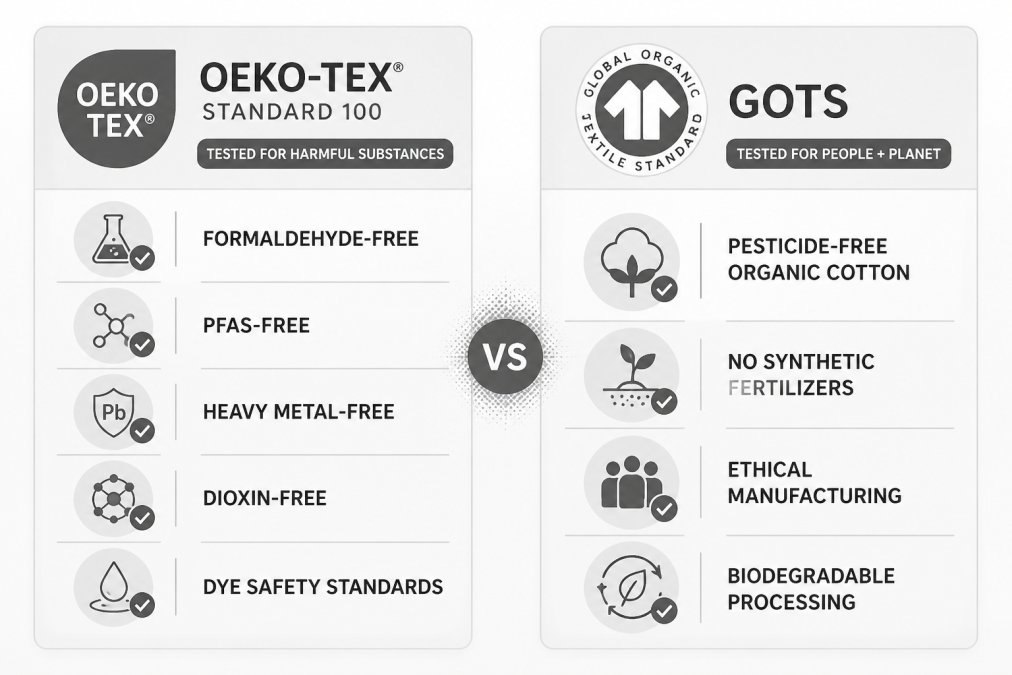
Certifications verify that "non-toxic" claims are real. Two key certifications: OEKO-TEX STANDARD 100 and GOTS.
Understanding OEKO-TEX STANDARD 100
OEKO-TEX STANDARD 100 tests finished fabrics for chemical residues including formaldehyde, heavy metals, azo dyes, and PFAS. Class I is the strictest level, tested against limits for baby articles. Independent third-party verification means the dyes and finishes don't leave detectable chemical residues. Say "made with OEKO-TEX STANDARD 100 certified fabric."
GOTS Certified Organic Cotton Standards
GOTS (Global Organic Textile Standard) covers organic cotton from seed to finished product. It verifies that cotton was grown without synthetic pesticides or fertilizers, and that processing involved no harmful chemicals.
Say "made with GOTS certified organic cotton."
GOTS doesn't cover viscose from bamboo, only natural fibers. So if you see "GOTS certified" on a viscose product, that's a red flag. The certification doesn't apply.
Both certifications matter because they're third-party verification. OEKO-TEX STANDARD 100 testing criteria When you see these labels, you know chemical residues have been tested and found below safety limits.
Organic Cotton Boxers – Wrapped →
Non-Toxic Loungewear for Men: Top Options
Organic Cotton Boxers - Wrapped
Mellow Mile's Organic Cotton Boxers - Wrapped ($24.00) start with a simple idea: underwear should feel like nothing once it's on. These are made with GOTS certified organic cotton and dyed with OEKO-TEX STANDARD 100 certified dyes.
The wrapped waistband is the standout feature. Instead of a traditional elastic band that digs in or rolls, the organic cotton wraps around your waist. This eliminates pressure points and the constant friction that causes irritation over a 12-hour day.
Customers report zero irritation, even those with sensitive skin. One reviewer with a history of skin sensitivity noted the difference was immediate. The breathable fabric and absence of chemical finishes mean no itch by day's end, unlike synthetic boxers that accumulate sweat and residues.
The tradeoff: organic cotton requires care to maintain. Hang drying preserves the fabric longer than machine drying. But for loungewear and everyday wear, this is the safest option for your skin.
| Feature | Organic Cotton Boxers - Wrapped |
|---|---|
| Material | GOTS certified organic cotton |
| Dyes | OEKO-TEX STANDARD 100 certified |
| Waistband | Organic cotton wrapped (no elastic) |
| Price | $24.00 |
| Best For | Sensitive skin, all-day comfort |
Organic Cotton Boxers
Mellow Mile's Organic Cotton Boxers ($24.00) deliver the same non-toxic foundation as the wrapped version, with a traditional elastic waistband. Made with GOTS certified organic cotton and OEKO-TEX STANDARD 100 certified dyes, these are built for comfort without chemical compromise.
The standard waistband works well for most men.
| Feature | Organic Cotton Boxers |
|---|---|
| Material | GOTS certified organic cotton |
| Dyes | OEKO-TEX STANDARD 100 certified |
| Waistband | Standard elastic |
| Price | $24.00 |
| Best For | Everyday wear, all-day comfort |
Athletic Tee
The Athletic Tee ($44.00) addresses a real problem: most performance shirts rely on polyester and chemical finishes to manage moisture. Mellow Mile's version uses 95% viscose from bamboo with 5% elastane, dyed with OEKO-TEX STANDARD 100 certified dyes.
| Feature | Athletic Tee |
|---|---|
| Material | 95% viscose from bamboo, 5% elastane |
| Dyes | OEKO-TEX STANDARD 100 certified |
| Weight | Lightweight |
| Price | $44.00 |
| Best For | Workouts, active loungewear |
How to Wash Organic Cotton Loungewear
Proper care extends the life of non toxic loungewear for men and preserves the integrity of the fibers. Organic cotton and viscose from bamboo require different approaches than synthetic fabrics.
Water Temperature and Detergent Selection
Wash organic cotton and viscose from bamboo in cool water (below 85°F). Hot water breaks down the fibers faster and can cause shrinkage. Cold water preserves the fabric's softness and elasticity.
Drying Methods to Preserve Fabric Integrity
Hang drying is the best option for both organic cotton and viscose from bamboo. Air drying prevents shrinkage, preserves elasticity, and extends the garment's life significantly.
Common Mistakes When Choosing Non-Toxic Clothing
Confusing "natural" with "safe." Bamboo fiber sounds natural, but viscose from bamboo is a regenerated cellulosic made through chemical processing. The safety comes from how it's finished (OEKO-TEX certified dyes), not from the source material. Don't assume "bamboo" automatically means non-toxic.
FTC guidance on textile labeling and claims
Frequently Asked Questions
What makes loungewear truly non-toxic?
Non-toxic loungewear eliminates synthetic chemicals, PFAS, and harsh dyes from the production process. Look for certifications like OEKO-TEX STANDARD 100, which tests fabrics against strict limits for harmful substances, and GOTS certification for organic cotton, which ensures the fiber was grown without synthetic pesticides. The fabric itself matters: organic cotton and viscose from bamboo made with OEKO-TEX certified dyes reduce chemical residues against your skin compared to polyester blends treated with synthetic finishes.
Are bamboo clothes better for skin?
Viscose from bamboo offers benefits for skin-sensitive individuals because it's processed without relying on polyester or harsh chemical finishes. The fabric is breathable and lightweight, reducing heat and moisture buildup that can irritate skin. However, viscose from bamboo is a regenerated cellulosic fiber made through chemical processing, so its benefits come from the manufacturing method and dye selection (OEKO-TEX certification), not from bamboo plant properties. For maximum skin comfort, choose pieces made with OEKO-TEX certified dyes to minimize chemical residues.
How do I know if a product is actually PFAS-free?
Check for third-party certifications like OEKO-TEX STANDARD 100, which tests finished fabrics for PFAS and other forever chemicals. Reputable brands disclose their certifications on product pages and provide access to test results. Ask manufacturers directly about their dye suppliers and finishing processes. OEKO-TEX Class I certification indicates the fabric met the strictest limits used for baby articles, which is a reliable standard for chemical safety. Avoid vague claims like 'clean' or 'natural', look for specific certifications you can verify.
How should I wash organic cotton loungewear to keep it non-toxic and durable?
Wash organic cotton in cold water with a gentle, chemical-free detergent to preserve the fabric and avoid reintroducing chemicals after purchase. Use the delicate or gentle cycle, and avoid fabric softeners and bleach. Hang dry when possible to extend garment life and prevent shrinkage; if using a dryer, use low heat. Organic cotton may shrink slightly in hot water, so cold water washing maintains fit and durability. Washing this way keeps the garment performing well through many wears, justifying the investment in non-toxic materials.
Why do non-toxic loungewear options cost more than regular athletic wear?
Non-toxic loungewear costs more because it uses higher-quality materials, third-party certifications, and cleaner manufacturing processes. GOTS certified organic cotton is grown without synthetic pesticides. OEKO-TEX certified dyes and finishes eliminate harsh chemicals, adding to production costs. Small-batch production ensures quality control and durability, meaning the garment lasts longer and performs better through many wears. The price reflects the actual cost of producing safe, durable clothing, not a premium markup.