


Are There PFAS in Organic Cotton?
Table of Contents
- Understanding PFAS and Textile Finishes
- PFAS in Cotton Clothing: The Finish Problem
- How to Identify Harmful Chemical Finishes on Labels
- How to Avoid PFAS in Clothes: A Practical Approach
- PFAS-Free Clothing: What Certification Really Means
- Health Effects of Chemical Exposure Through Clothing
- Frequently Asked Questions
Last Updated: October 10, 2026
Understanding PFAS and Textile Finishes
PFAS in organic cotton is a real concern that many health-conscious shoppers overlook. These "forever chemicals" don't disappear after you wash your clothes. They accumulate in your body and the environment. Understanding where they come from helps you make smarter choices about what you wear.

PFAS stands for per- and polyfluoroalkyl substances. They're human-made chemicals used in thousands of products. In textiles, manufacturers add them to create water-resistant, stain-resistant, and wrinkle-resistant finishes. Even organic cotton can contain PFAS if it receives these chemical treatments after harvest.
What PFAS Are and Why They End Up in Clothing
PFAS are synthetic chemicals prized for one reason: they repel water and oil. Once applied to fabric, they bond tightly and don't wash away easily. That's why they're called "forever chemicals." They persist in your body for years.
Clothing manufacturers use PFAS-based finishes because they solve real problems. A shirt treated with PFAS resists stains. Pants coated with these chemicals shed water. Underwear finished with them stays dry longer. But that durability comes at a cost. The chemicals leach into your skin during wear and into wastewater during washing.
How Chemical Finishes Are Applied During Manufacturing
Most chemical finishes are applied after the fabric is woven. The raw cloth moves through chemical baths. Manufacturers dip, spray, or pad the fabric with finish solutions. Heat-setting locks the chemicals into the fibers. This process happens whether the base fabric is organic cotton or synthetic.
The timing matters. A shirt made from organic cotton loses its chemical-free status the moment it enters the finishing bath. Certification like GOTS covers only the fiber and dyeing stages. It does not regulate what happens in the finishing department.
PFAS in Cotton Clothing: The Finish Problem
The real problem with PFAS in organic cotton is this: the organic certification ends before finishing begins. You can buy organic cotton that's been treated with PFAS-based water repellents. It's technically still "organic." But it's no longer chemical-free.
Wrinkle-Resistant and Stain-Resistant Treatments
Wrinkle-resistant finishes often contain formaldehyde or PFAS-based resins. These chemicals cross-link the cellulose fibers, preventing wrinkles from setting. Stain-resistant treatments use PFAS to create an oil and water barrier on the fabric surface.
Both finishes persist through multiple wash cycles. A shirt treated with stain-resistant finish will repel spills even after 20 washings. That durability is the problem. The chemicals don't break down. They stay in the fabric and migrate to your skin.
Many brands use these finishes without disclosing them clearly. You might see "easy care" or "permanent press" on a label. These terms often hide PFAS-based chemistry.
Water-Resistant Clothing PFAS and Durability Coatings
Water-resistant finishes are among the heaviest PFAS users. Outdoor gear, athletic wear, and performance fabrics rely on these coatings. The chemicals create a hydrophobic layer that sheds water while allowing the fabric to breathe.
The catch: water-resistant PFAS finishes are extremely durable. That's their selling point and their risk. A jacket treated with PFAS water repellent will shed rain for years. The chemicals will also leach into your body for years.
How to Identify Harmful Chemical Finishes on Labels
Reading a fabric label takes 10 seconds. It tells you the fiber content but rarely discloses finishing chemicals. You need to know what to look for.
Reading Fabric Labels and Finish Disclosures
Check the label for these finish-related terms:
- Wrinkle-resistant, permanent press, easy care, likely formaldehyde or PFAS resins
- Water-repellent, water-resistant, weatherproof, almost certainly PFAS-based
- Stain-resistant, soil-resistant, repels liquids, PFAS finishes
- Antimicrobial, odor-resistant, may contain PFAS or silver nanoparticles
- Durable finish, durable water repellent (DWR), PFAS coating
The label should also list certifications. Look for GOTS (for organic cotton) or OEKO-TEX STANDARD 100 (for chemical testing). These certifications provide some assurance, though neither eliminates all finishing chemicals.
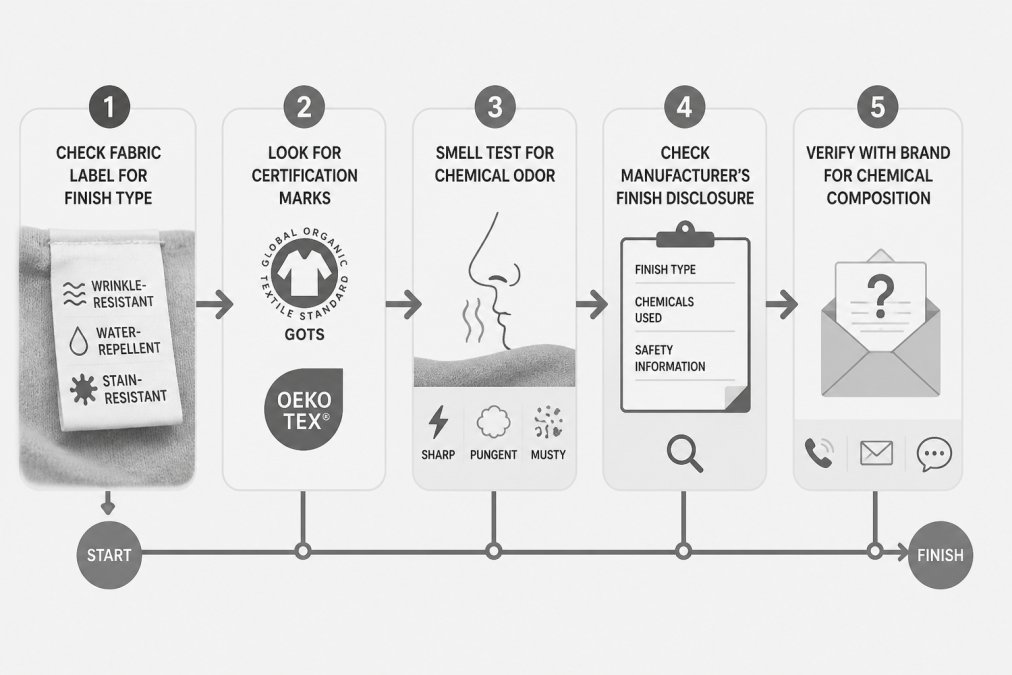
Red Flags: Chemical Odors and Volatile Organic Compounds
Your nose is a useful tool. Chemical finishes often produce a sharp, pungent, or musty smell. This odor comes from volatile organic compounds (VOCs) released by the finish.
A strong chemical smell on new clothing signals recent finishing. The VOCs haven't fully off-gassed yet. Wearing or washing the garment releases more chemicals into the air and onto your skin.
Smell alone doesn't confirm PFAS. But it indicates chemical finishing has occurred. If you can smell it, chemicals are still active in the fabric.
How to Avoid PFAS in Clothes: A Practical Approach
The safest approach combines three steps: choose untreated fabrics, verify certifications, and ask manufacturers directly.
Choosing Organic Cotton Without Chemical Finishing
Organic cotton alone doesn't guarantee PFAS-free clothing. You need organic cotton that skips the chemical finishing step. This is rare in mass-market retail but becoming more common among intentional brands.
Look for these markers:
- No finish-related terms on the label, the absence of "water-resistant" or "wrinkle-resistant" is a good sign
- Minimal chemical smell, organic cotton without finish should have little to no odor
- Dyed with OEKO-TEX certified dyes, this indicates chemical oversight during dyeing
- Manufacturer transparency, brands that disclose their finishing process are more trustworthy
At Mellow Mile, we prioritize organic cotton without chemical finishing. Our Organic Cotton Boxers are made with GOTS certified organic cotton and dyed with OEKO-TEX certified dyes. No water repellents. No stain-resistant coatings. Just soft, breathable fabric.
What Certifications Actually Protect You
Certifications matter, but each has limits. Understanding what they cover helps you interpret labels correctly.
GOTS (Global Organic Textile Standard): GOTS certified organic cotton means the fiber was grown without synthetic pesticides and processed without heavy metals or formaldehyde. But GOTS certification ends at the dyeing stage. It does not cover finishing chemicals like PFAS.
OEKO-TEX STANDARD 100: This certification tests finished fabric against chemical limits. It checks for heavy metals, formaldehyde, and certain banned substances. But OEKO-TEX does not specifically test for PFAS. Class I testing applies the strictest limits (used for baby articles), but PFAS may still be present below detection thresholds.
Neither certification guarantees PFAS-free clothing.
PFAS-Free Clothing: What Certification Really Means
"PFAS-free" is not an official certification. No government body has standardized what counts as PFAS-free. Some brands claim PFAS-free status based on supplier declarations. Others conduct third-party testing.
GOTS Certified Organic Cotton and OEKO-TEX Standards
GOTS certified organic cotton provides the strongest baseline. It ensures the fiber itself is clean. But finishing happens after GOTS certification ends. A brand can use GOTS cotton and then apply PFAS finishes.
OEKO-TEX STANDARD 100 adds a layer of protection by testing the finished product. If a garment carries both GOTS and OEKO-TEX certification, you have more assurance. The cotton is organic. The finished fabric has been tested against a chemical standard.
Limits of At-Home Testing and When Laboratory Analysis Matters
You can perform simple at-home tests. Smell the fabric. Wash it and see if the smell persists. Check for visible dyes or coatings. But these tests don't confirm the presence or absence of PFAS.
Real PFAS detection requires laboratory analysis. Accredited labs use liquid chromatography or mass spectrometry to identify specific PFAS compounds. This testing is expensive and typically only done by brands committed to transparency.
Most consumers won't send clothing to a lab. Instead, rely on certifications and manufacturer transparency. Ask brands directly: "Does your finish contain PFAS?" Honest brands will answer.
Health Effects of Chemical Exposure Through Clothing
Wearing clothing treated with PFAS-based finishes exposes you to these chemicals daily. The exposure happens through skin contact and inhalation.
Skin Irritation, Allergies, and Contact Dermatitis
PFAS and other finishing chemicals can trigger skin reactions. Some people experience itching, redness, or a rash where treated clothing contacts their skin. Others develop contact dermatitis after repeated exposure.
The reaction depends on skin sensitivity and chemical concentration. Someone with eczema or sensitive skin is more likely to react. But anyone can develop a reaction with prolonged exposure.
Washing new clothing before wearing it reduces but doesn't eliminate the risk. Volatile chemicals off-gas during the first few washes. But PFAS remain bonded to the fibers.
Inhalation and Systemic Health Implications
Wearing water-resistant or stain-resistant clothing releases VOCs into the air near your face. You inhale these chemicals with every breath. Over time, they accumulate in your body.
PFAS are lipophilic, meaning they dissolve in fat. Your body stores them in fatty tissues and the liver. They don't break down easily. Once in your system, they persist for years.
Research indicates PFAS exposure is linked to immune suppression, thyroid effects, and liver damage. Reducing your exposure through clothing choices is one practical step you can take.
Choosing clothing free from PFAS-based finishes protects your skin and reduces your chemical exposure. The challenge is finding brands that prioritize this.
Look for brands that use GOTS certified organic cotton and OEKO-TEX certified dyes without adding water-resistant or stain-resistant finishes. Ask manufacturers about their finishing process. Read labels carefully for finish-related terms.
Our Organic Cotton Boxers are made with GOTS certified organic cotton and OEKO-TEX certified dyes, with no chemical finishes. They're designed to feel good against your skin and last through repeated wear and washing. Get started with Mellow Mile and experience the difference that intentional material choices make.
| Certification | What It Covers | What It Doesn't Cover | PFAS Protection |
|---|---|---|---|
| GOTS | Organic fiber, dyeing, processing | Chemical finishing | Partial (ends before finishing) |
| OEKO-TEX STANDARD 100 | Finished fabric chemical limits | Specific PFAS compounds | Limited (may not test PFAS) |
| Both Combined | Organic fiber + finished fabric testing | PFAS-specific limits | Moderate (better than either alone) |
Frequently Asked Questions
Is there PFAS in organic cotton clothing?
Organic cotton fiber itself does not naturally contain PFAS. However, PFAS and other harmful chemicals can be introduced during textile finishing processes. Water-repellent treatments, wrinkle-resistant finishes, and stain-resistant coatings often contain PFAS compounds. Even organic cotton can be treated with these finishing agents after harvest, so certification of the finished fabric, not just the raw fiber, matters most.
How can I tell whether clothing has a PFAS finish?
Check the fabric label for finish disclosures like 'water-resistant,' 'stain-resistant,' or 'wrinkle-resistant.' A strong chemical odor, sharp, pungent, or musty, can signal volatile organic compounds and finishing agents. Ask the brand directly about their finishing process and request safety data sheets. Look for OEKO-TEX STANDARD 100 certification, which tests for harmful chemical residues. At-home smell tests and washing can reduce odors, but laboratory testing is the only way to confirm PFAS absence.
Does organic cotton mean clothing is PFAS-free?
No. Organic cotton certification covers how the fiber was grown, not how the finished garment was treated. Organic cotton can still receive water-resistant, stain-resistant, or wrinkle-resistant finishes that contain PFAS. To ensure PFAS-free clothing, look for finished-fabric certifications like OEKO-TEX STANDARD 100, which tests the completed garment for harmful chemical residues, or ask the brand if their products skip chemical finishing entirely.
What should I ask a clothing brand about PFAS?
Ask whether their garments receive water-repellent, stain-resistant, or wrinkle-resistant treatments. Request details on finishing agents used and whether they contain PFAS or per- and polyfluoroalkyl substances. Ask if they have third-party testing or certifications like OEKO-TEX STANDARD 100. Inquire about their supply chain transparency and whether they can provide safety data sheets for finishing chemicals. Brands committed to PFAS-free clothing will have clear answers and documentation.