


Why Synthetic Fabrics Cause Skin Irritation: 2026 Guide
Table of Contents
- What Is Textile Contact Dermatitis?
- How Synthetic Fabrics Trigger Skin Irritation
- Common Symptoms of Fabric Allergy and Irritation
- Are Bamboo Clothes Better for Skin?
- What Is OEKO-TEX STANDARD 100 Certified Fabric?
- Laundry Care: Removing Chemical Residue from Synthetic Fabrics
- Layering and Lifestyle Strategies for Sensitive Skin
- Frequently Asked Questions
Last Updated: September 23, 2026
What Is Textile Contact Dermatitis?
Textile contact dermatitis is an inflammatory skin reaction caused by direct contact with fabrics, dyes, or chemical finishes used in clothing production. It shows up as itching, redness, and rash where fabric meets skin. This guide from Mellow Mile breaks down why synthetic fabrics cause skin irritation, what the symptoms look like, and which material choices reduce exposure.
The mechanism comes down to two different problems: irritation, a direct chemical or physical assault on the skin barrier, and true allergy, where the immune system reacts to a specific substance.
Irritant vs. Allergic Contact Dermatitis
Irritant contact dermatitis is a non-immune reaction. The fabric or a residue on it damages the outer skin layer through friction, trapped moisture, or chemical exposure. Anyone can develop it given enough exposure.
Allergic contact dermatitis is an immune response. The body identifies a specific chemical as a threat, and once sensitized, even small exposures can trigger it. Patch testing by a dermatologist confirms it.
The practical difference: irritant reactions often resolve once you remove the trigger, while allergic reactions can escalate with repeated exposure.
How Synthetic Fabrics Trigger Skin Irritation
Synthetic fabrics cause skin irritation through two overlapping pathways: chemical residues left during manufacturing and the physical environment the fabric creates against your skin. The finishing agents and how the fabric manages heat and moisture often do more damage than the polyester itself.
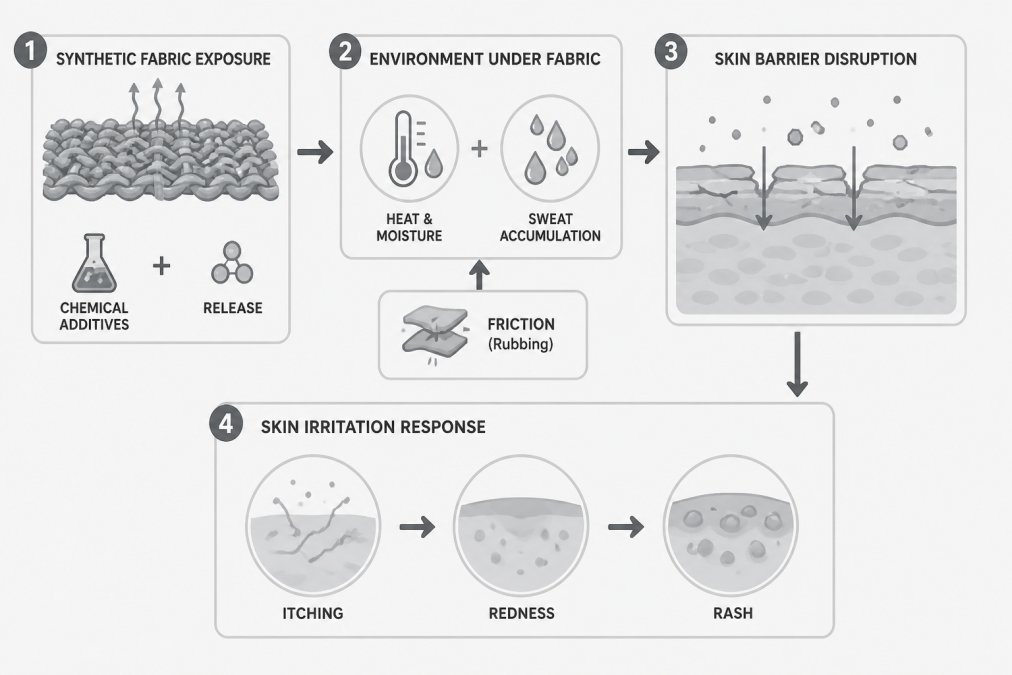
Chemical Additives: Formaldehyde Resins and Para-Phenylenediamine
Formaldehyde resins are finishing agents applied to fabrics to reduce wrinkling and shrinkage. They release small amounts of formaldehyde over time, a common trigger for contact dermatitis in people with sensitive skin or an existing allergy.
Para-phenylenediamine, or PPD, is a dye component used in some dark-colored textiles.
Heat, Moisture, and Breathability
This is where synthetic fibers struggle most. Polyester and other polymer-based fabrics are not naturally breathable, so sweat accumulates against the skin instead of evaporating. That trapped moisture softens the skin barrier, making it more vulnerable to friction and chemical residues.
Common Symptoms of Fabric Allergy and Irritation
Symptoms of fabric allergy typically appear where fabric contacts skin most directly and where friction and sweat accumulate: the waistband, underarms, neck, inner thighs, and the creases behind the knees and elbows. The most common signs are pruritus (itching) and erythema (visible redness). Irritant rashes tend to stay confined to the contact area with sharp borders; allergic rashes can spread beyond it because the immune response is systemic once triggered.
Other symptoms include:
- A raised, bumpy skin rash that may look like hives
- Dry, cracked, or scaly patches after prolonged exposure
- Burning or stinging sensations, especially with sweat
- Small blisters or weeping areas in more severe allergic reactions
- Post-inflammatory hyperpigmentation, where healed areas stay darker than surrounding skin for weeks or months
- Symptoms that improve on weekends or vacations and return during the workweek
Conditions That Look Like Fabric Allergy
Several skin conditions produce overlapping symptoms, and misreading them delays the right fix:
- Atopic dermatitis (eczema): chronic, itchy, and often linked to a personal or family history of asthma, hay fever, or eczema. It flares with dryness and stress, not just with specific garments.
- Heat rash (miliaria): small, prickly bumps in sweat-covered areas, common in hot weather or under non-breathable fabric. It resolves when the skin cools and dries.
- Hives (urticaria): raised, transient welts that move around the body and often fade within hours. True textile allergy rarely produces this pattern.
- Cholinergic urticaria: tiny itchy bumps triggered by a rise in body temperature, including from exercise or a hot shower, not by the fabric itself.
- Fungal infections: ring-shaped or scaly patches in moist skin folds that can mimic a persistent contact rash.
Are Bamboo Clothes Better for Skin?
Bamboo clothing can be better for sensitive skin, but the answer depends entirely on how the fabric is made. Most "bamboo" clothing on the market is viscose from bamboo, a regenerated cellulosic fiber produced through chemical processing. It is soft, lightweight, and breathable, but it is not a natural fiber.
What Is OEKO-TEX STANDARD 100 Certified Fabric?
OEKO-TEX STANDARD 100 certified fabric is material tested against a published list of harmful substances, including regulated and non-regulated chemicals, at limits set for the product's intended use. The certification applies to the fabric, not the finished garment or the brand that sells it.
Laundry Care: Removing Chemical Residue from Synthetic Fabrics
Laundry habits change how much chemical residue stays in contact with your skin. New garments carry the highest concentration of finishing agents, and residue accumulates differently depending on how you wash and dry.
A practical routine for reducing exposure:
- Wash new synthetic garments twice before the first wear, using a fragrance-free detergent.
- Skip fabric softener entirely. It coats fibers with additional chemicals that sit against skin.
- Avoid dryer sheets for the same reason. Wool dryer balls do the same job without the residue.
- Use the extra rinse cycle if your machine has one, which helps flush out loosened residue.
- Wash synthetic items separately from natural fiber items when you can, since lint transfer carries residue between loads.
Layering and Lifestyle Strategies for Sensitive Skin
Most people cannot simply stop wearing synthetic fabrics. Work uniforms, athletic gear, and safety clothing are often synthetic by design, so the practical question is how to wear them without triggering a reaction. Layering is the most underused tool for this: it puts a barrier between the reactive fabric and your skin.
How to Layer for Different Situations
Under a work uniform. A thin organic cotton base layer under a polyester or blended uniform keeps the irritating material off your skin. Look for a close-fitting tee or camisole with flat seams and a tagless neckline, since tags and raised seams create their own friction points. If the uniform must sit against skin for safety reasons, a short-sleeve base layer still helps where it covers.

Personal Care That Supports the Barrier
Moisturizers and emollients applied within a few minutes of showering help restore skin barrier function, making skin more resilient to friction and chemical exposure. Fragrance-free formulas are safer when skin is reactive, and thick ointments or creams generally outperform lotions for barrier repair. Keep showers short and lukewarm, since hot water strips lipids from the skin.
The Psychological Side
Chronic skin irritation is exhausting in a way that is easy to underestimate. It affects sleep, clothing choices, workout routines, and confidence, and people who deal with it for years often accept discomfort as normal. That is worth pushing back on, because the trigger is frequently identifiable and the fix is often a change in fabric, finish, or laundry routine rather than lifelong management.
A Quick Reference for Matching the Fix to the Problem
| Problem | Likely Cause | Practical Fix |
|---|---|---|
| Itching under waistband | Friction plus trapped moisture | Organic cotton base layer, wrapped waistband |
| Rash after workouts | Sweat accumulation, heat retention | Breathable viscose from bamboo tee as base layer |
| Reaction to new garment | Finishing agent residue | Double wash, extra rinse, fragrance-free detergent |
| Symptoms that fade on weekends | Work uniform exposure | Layering, barrier garment underneath |
| Persistent unexplained rash | Possible true allergy | Patch testing, dermatological assessment |
At Mellow Mile, we build essentials around this exact problem. Our Athletic Tee is made from 95% viscose from bamboo with 5% elastane, dyed with OEKO-TEX certified dyes, and designed to breathe rather than trap heat. Our Organic Cotton Boxers are made with GOTS certified organic cotton and OEKO-TEX certified dyes, with an organic cotton wrapped waistband that does not roll or dig in.

Frequently Asked Questions
Can I be allergic to synthetic fabrics?
Yes, though true fabric allergies are less common than irritant reactions. Synthetic fabrics often contain chemical additives like formaldehyde resins and para-phenylenediamine in dyes that can trigger allergic contact dermatitis. Symptoms include itching, redness, and rash at contact points. A dermatologist can confirm with patch testing. If you react to synthetic fabrics, switching to organic cotton or viscose from bamboo may reduce exposure to these additives.
How long does it take for textile dermatitis to go away?
Once you stop wearing the irritating fabric, mild contact dermatitis often improves within one to two weeks. Allergic reactions may take longer, especially if you continue occasional exposure. Using topical corticosteroids or antihistamines as directed by a doctor can speed recovery. Wash new clothing before wearing to remove surface chemical residue, and choose fabrics made with OEKO-TEX STANDARD 100 certified fabric to limit further irritation.
Why is my skin suddenly sensitive to fabrics?
Skin sensitivity can develop over time with repeated exposure to chemical additives, dyes, and synthetic fibers that trap moisture. Heat, sweat, and friction weaken the skin barrier, making reactions more likely. Changes in laundry products, stress, or underlying conditions like atopic dermatitis can also play a role. If irritation persists, a dermatological assessment can identify triggers and guide you toward hypoallergenic options like organic cotton.
How do I get rid of a polyester rash?
Stop wearing the polyester item immediately and switch to a breathable fabric. Wash the affected area with cool water and a gentle cleanser, then apply a moisturizer or emollient to support skin barrier function. Over-the-counter hydrocortisone or antihistamines can reduce itching and redness. If the rash does not improve in a few days, see a doctor. To prevent recurrence, choose clothing made with OEKO-TEX STANDARD 100 certified fabric or organic cotton.