


Best PFAS-Free Athletic Clothing Brands
Table of Contents
- What Are PFAS and Why They Matter in Athletic Wear
- Health Risks of Synthetic Chemical Finishes in Activewear
- Certifications That Verify Non-Toxic Athletic Clothing
- Best Materials for PFAS-Free Athletic Clothing
- Top Non-Toxic Activewear Brands for Health-Conscious Men
- How to Wash Athletic Clothing Without PFAS Recontamination
- Durability and Performance: What PFAS-Free Activewear Actually Delivers
- Frequently Asked Questions
Last Updated: September 20, 2026
What Are PFAS and Why They Matter in Athletic Wear
Per- and polyfluoroalkyl substances, commonly called PFAS or "forever chemicals," are synthetic compounds used in textile manufacturing to create water-resistant and stain-resistant finishes. These chemicals don't break down naturally in the environment or in your body, which is why they've earned the nickname "forever chemicals." Most conventional athletic clothing relies on PFAS-based treatments to achieve moisture-wicking and durability properties that athletes expect.
The problem is direct: when you wear treated fabrics, PFAS can migrate from the textile into your skin. Your skin is your body's largest organ, and it absorbs what touches it. Over time, repeated exposure to these chemicals accumulates in your bloodstream and organs. This is where PFAS-free athletic clothing becomes more than a marketing preference, it becomes a health consideration for anyone serious about reducing daily chemical exposure.
Health Risks of Synthetic Chemical Finishes in Activewear
Synthetic chemical finishes in conventional athletic wear don't just sit on the fabric surface. Research indicates that PFAS compounds can accumulate in human blood serum over time through repeated skin contact. Your body cannot metabolize or eliminate these chemicals efficiently, meaning exposure is cumulative.
The specific health concerns center on endocrine disruption. PFAS chemicals have been studied for their potential to interfere with hormone regulation, immune function, and liver health (How PFAS Impacts Your Health | PFAS and Your Health). For athletes who train regularly and wear treated fabrics daily, the exposure window is significant. A runner in moisture-wicking polyester for an hour workout, then wearing the same treated synthetic shirt casually afterward, extends contact time substantially.
Beyond PFAS, conventional synthetic fibers often rely on heavy metals and formaldehyde-based dyes during manufacturing. These residues can remain in the finished fabric and transfer to skin. The cumulative effect of wearing multiple synthetic-treated garments daily, shirt, shorts, undergarments, compounds the exposure.
Certifications That Verify Non-Toxic Athletic Clothing
Not all "non-toxic" claims carry equal weight. Third-party certifications provide independent verification that fabrics have actually been tested and meet specific chemical standards. Understanding how these tests work, and what they measure, is the difference between marketing language and genuine safety assurance.
OEKO-TEX STANDARD 100 tests finished fabrics against strict limits for harmful substances, including heavy metals, formaldehyde, pesticide residues, and other regulated chemicals. The testing process uses mass spectrometry and chromatography to detect chemical residues at parts-per-million levels. Class I certification means the fabric was tested against limits designed for baby articles, the strictest category available. When you see "made with OEKO-TEX STANDARD 100 certified fabric," the material has passed independent lab testing at a third-party facility accredited by the OEKO-TEX organization. The test covers over 300 harmful substances, and results are published on a certificate that brands must disclose.
GOTS (Global Organic Textile Standard) certification applies specifically to organic cotton products. It covers the entire supply chain from farm to finished garment, ensuring pesticide-free cultivation and non-toxic processing. GOTS auditors inspect farms, mills, and manufacturing facilities to verify compliance. For organic cotton athletic wear, GOTS certification is the most comprehensive standard available because it tracks the fiber from cultivation through finished product. Say "made with GOTS certified organic cotton" when you see this label.
Bluesign certification focuses on preventing harmful substances from entering the manufacturing process in the first place. Rather than testing the finished product, Bluesign works with mills to eliminate toxic chemicals at every production stage. This prevents chemical release into waterways and reduces worker exposure during manufacturing. Bluesign-certified mills use approved chemicals only and track their use through production records that are audited annually.
What "independently tested" actually means: A third-party lab (not the brand, not the mill) receives fabric samples, tests them against published chemical limits, and issues a certificate. The brand cannot influence the results. This is different from brand claims or mill certifications that lack external verification. When shopping, look for the actual certification number or certificate link, legitimate brands publish these publicly.
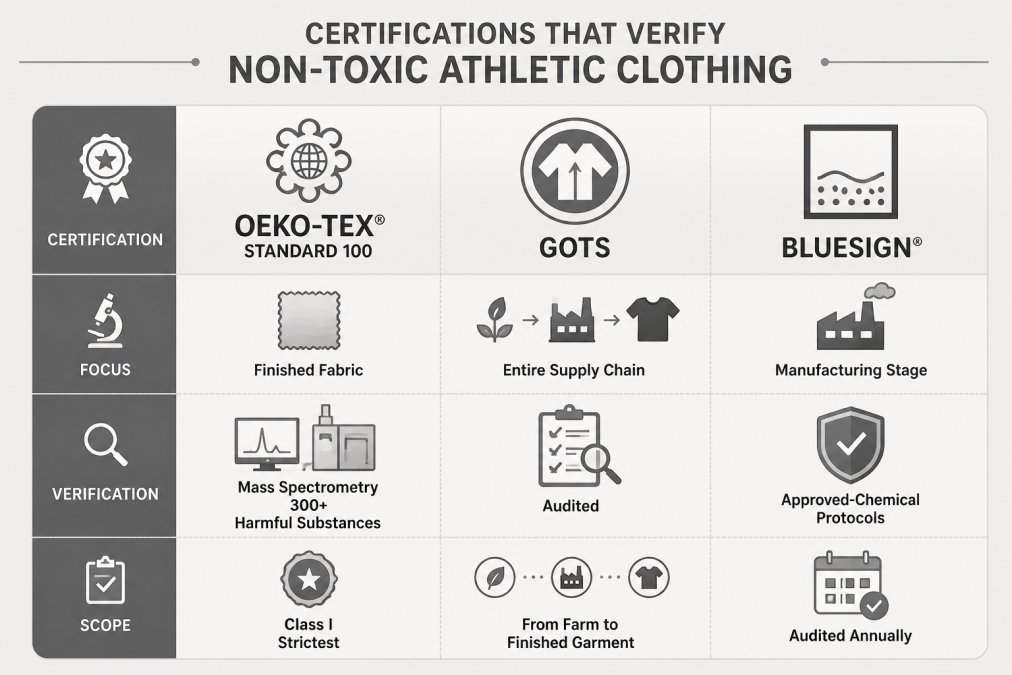
The strongest position is when a brand combines certifications. Organic cotton with GOTS certification ensures the raw material is clean and traceable. Adding OEKO-TEX testing on the finished product confirms that processing didn't reintroduce chemicals. This layered approach gives you the highest confidence in what you're wearing against your skin. At Mellow Mile, our Athletic Tees are made with OEKO-TEX STANDARD 100 certified fabric, meaning the finished garment has passed independent lab testing for chemical residues before it reaches you.

Best Materials for PFAS-Free Athletic Clothing
The material itself determines whether PFAS-based finishes are even necessary.
Viscose from bamboo offers natural moisture-wicking without chemical treatment. Made through chemical processing of bamboo cellulose, viscose from bamboo creates a lightweight, breathable fabric that pulls sweat away from skin. Unlike synthetic fibers that require PFAS coatings to achieve moisture management, viscose from bamboo accomplishes this through its fiber structure. The fabric is made with OEKO-TEX STANDARD 100 certified dyes, helping ensure the finished shirt is free from harsh chemical residues. At Mellow Mile, our Athletic Tees combine 95% viscose from bamboo with 5% elastane for stretch and durability, delivering performance without synthetic chemical finishes.
Organic cotton is a natural fiber grown without synthetic pesticides or fertilizers. It breathes naturally and absorbs moisture, making it ideal for athletic wear. Organic cotton doesn't require PFAS treatments because its fiber properties already support moisture management. The difference between organic and conventional cotton is significant: conventional cotton uses roughly 16% of global pesticide volume despite occupying only 2.5% of cultivated land. Organic cotton eliminates this chemical load from the start.
Merino wool is naturally temperature-regulating and antimicrobial, reducing the need for chemical finishes. For cooler-weather training or layering, merino provides performance without PFAS coatings. It's durable, breathes well, and resists odor naturally.
The pattern across all three materials is the same: their inherent fiber properties eliminate the need for PFAS-based finishes. You're not paying for chemical treatments; you're paying for materials that perform without them.
Top Non-Toxic Activewear Brands for Health-Conscious Men
Mellow Mile leads with intentional material choices and third-party certification. The Athletic Tee ($44.00) uses viscose from bamboo with OEKO-TEX STANDARD 100 certified dyes, eliminating both synthetic fibers and chemical finishes. Small-batch production ensures quality control at every stage. Customer feedback confirms the practical difference: "Wore it for a 6 mile run in August humidity. Didn't cling to me at mile 4 like my usual shirts do." The durability holds up, "Washed it with jeans by accident, no pilling. Drape is still good." For men prioritizing health-conscious materials without performance compromise, this is the strongest option.
Small-batch production also means you're not buying inventory that sat in warehouses for months before reaching you.
How to Wash Athletic Clothing Without PFAS Recontamination
The challenge with PFAS is that washing doesn't remove existing chemical finishes from conventional athletic wear. However, once you've switched to PFAS-free clothing, proper care prevents new chemical exposure.
Use cold water for washing PFAS-free athletic pieces. Hot water can damage natural fibers like viscose from bamboo and organic cotton, reducing durability. Cold water also uses less energy and protects the fabric structure.
Skip fabric softeners and dryer sheets. These products coat fabrics with additional chemicals that can deposit residues on your skin. For viscose from bamboo and organic cotton, they're unnecessary, these materials are naturally soft.
Hang dry when possible. Machine drying generates heat that can stress fibers and reduce garment lifespan. One customer noted: "Shrank a little in the dryer, so I hang dry now. Still great." Hang drying extends the life of your investment significantly.
Wash with like colors to prevent dye bleeding. PFAS-free dyes are typically more stable than conventional synthetic dyes, but separating colors remains best practice for any garment.
Avoid chlorine bleach. It degrades natural fibers and serves no purpose on PFAS-free fabrics that don't require brightening treatments.
Durability and Performance: What PFAS-Free Activewear Actually Delivers
The legitimate question is whether PFAS-free materials perform as well as conventional synthetic athletic wear, and whether they hold up over time. The answer depends on what "perform" means for your specific use case, and it requires honest talk about fiber behavior.
Frequently Asked Questions
What are PFAS and why are they used in athletic clothing?
Per- and polyfluoroalkyl substances (PFAS), also called forever chemicals, are synthetic compounds used to create durable water repellent (DWR) coatings on athletic fabrics. They resist moisture, stains, and odors, making clothes last longer and perform better. However, PFAS accumulate in the body and environment over time and do not break down. Choosing PFAS-free athletic clothing eliminates this persistent exposure from your daily wear.
How can I identify if my workout gear contains PFAS?
Check product labels for terms like 'water-resistant,' 'stain-resistant,' or 'DWR coating', these often indicate PFAS treatment. Look for certifications like OEKO-TEX STANDARD 100 or Bluesign, which restrict PFAS use. Contact the brand directly and ask for third-party testing documentation. Mellow Mile's Athletic Tee, for example, is made with OEKO-TEX certified dyes and viscose from bamboo, eliminating chemical finishes altogether.
Are there specific certifications to look for in non-toxic activewear?
Yes. OEKO-TEX STANDARD 100 certifies that fabric was tested against strict chemical limits, including PFAS restrictions. GOTS (Global Organic Textile Standard) applies to organic cotton and verifies it's grown without synthetic pesticides. Bluesign restricts hazardous chemicals throughout manufacturing. When shopping for PFAS-free athletic clothing, prioritize products made with OEKO-TEX certified fabric or organic cotton with GOTS certification.
How does the durability of PFAS-free activewear compare to conventional gear?
PFAS-free activewear performs differently depending on the material. Organic cotton and viscose from bamboo are durable when constructed well, though they don't have the water-repellent properties of PFAS-coated synthetics. Many customers report that quality PFAS-free pieces like Mellow Mile's Athletic Tee hold up through repeated washing and intense workouts without pilling or elastic degradation, proving that eliminating chemicals doesn't mean sacrificing longevity.