


Why Synthetic Fabrics Irritate Skin: A Practical Guide
Table of Contents
- Why Synthetic Fabrics Irritate Skin
- How Polyester and Nylon Trap Heat and Moisture
- Chemical Finishes in Clothing and Skin Reactions
- Textile Contact Dermatitis Symptoms and Recognition
- Best Fabrics for Sensitive Skin
- Laundry Habits and Fabric Irritation
- Frequently Asked Questions
Last Updated: October 2, 2026
Why Synthetic Fabrics Irritate Skin
Synthetic fabrics irritate skin because they trap heat and moisture, create friction against the skin barrier, and often contain chemical finishes that trigger allergic reactions. The problem isn't just the fiber itself, it's how these materials interact with your body's largest organ during movement, sweat, and daily wear.
Most people assume their skin irritation comes from exercise or detergent. The real culprit is often the fabric. Polyester, nylon, and acrylic dominate athletic wear and everyday clothing because they're cheap to produce and durable. But that durability comes at a cost: chemical treatments that lock in performance properties while locking out breathability.
One customer noted that after a 6-mile run in August humidity, his organic cotton shirt didn't cling at mile 4 like his usual polyester shirts did. Another reported zero irritation during workouts, something he'd never experienced with synthetic blends.

Understanding why this happens requires looking at three interconnected problems: heat and moisture trapping, the physical structure of synthetic fibers, and the chemical finishes applied during manufacturing.
The Three Main Culprits: Heat, Friction, and Chemicals
Synthetic fabrics fail your skin in three distinct ways, and they often work together to amplify irritation.
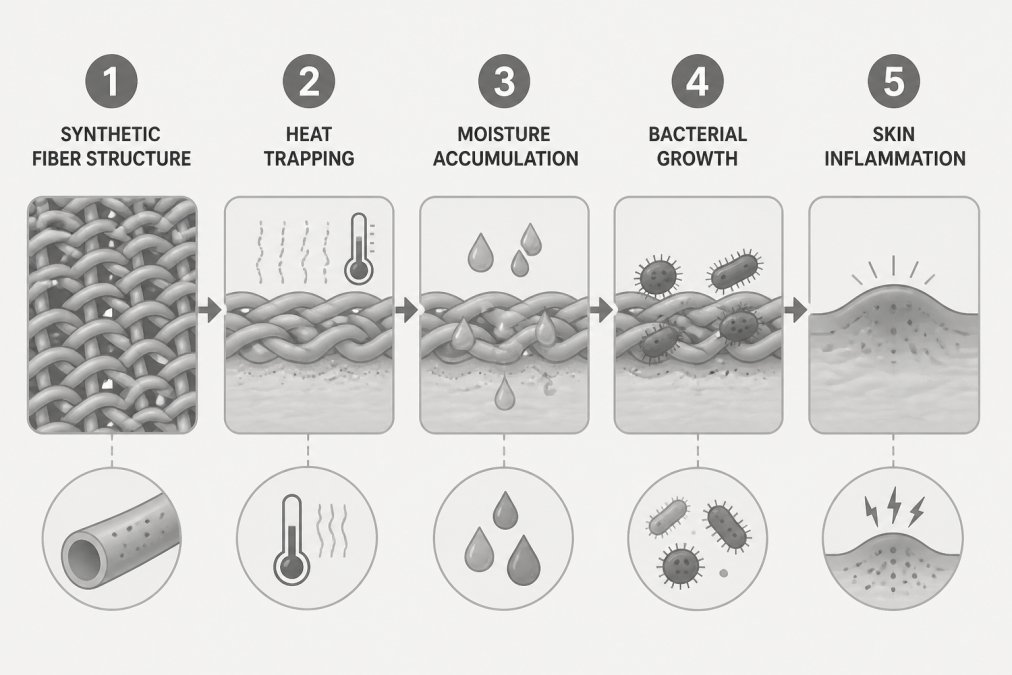
Heat and moisture trapping is the foundation of the problem. Polyester and nylon don't absorb sweat, they repel it. Moisture sits on your skin instead of wicking away, creating a warm, damp environment where bacteria thrive. This trapped environment raises skin temperature and humidity locally, breaking down your skin barrier and triggering inflammation.
Friction compounds the issue. Synthetic fibers are smooth and slippery, which sounds good until you move. That slickness means the fabric slides across your skin repeatedly during exercise or even sitting. Short, stiff synthetic fibers create microscopic abrasion, especially in areas where clothing fits snugly. The repeated rubbing irritates the skin and can trigger contact dermatitis, a localized allergic reaction to friction and chemical exposure combined.
Chemical finishes are the third piece. Formaldehyde resins, dyes, and performance treatments like PFAS coatings are applied to synthetic fabrics to enhance stretch, water resistance, and durability. These chemicals don't wash out completely. They remain on the fabric surface and leach into your skin, particularly when you sweat and your pores open. Your skin recognizes these foreign chemicals as irritants or allergens, triggering inflammation, redness, and itching.
How Polyester and Nylon Trap Heat and Moisture
Polyester and nylon are petroleum-based plastics engineered to repel water. This property makes them ideal for outdoor gear and performance wear, but it's the opposite of what your skin needs during activity.
When you sweat, these fibers don't absorb the moisture, they shed it. Your sweat sits on the fabric surface and against your skin, creating a humid microclimate. As body heat warms this trapped moisture, your skin stays damp and warm, conditions that activate sweat glands further and accelerate bacterial growth. The longer moisture stays in contact with your skin, the more your skin barrier breaks down, and the more permeable it becomes to irritants and allergens.
Nylon compounds this problem because it's slightly hygroscopic, it absorbs a small amount of moisture, but not enough to move sweat away from your skin. Instead, it holds moisture against you while still feeling dry on the outside. This creates false feedback: the fabric feels dry, but your skin is still wet. Your skin maceration (softening from prolonged moisture exposure) continues unchecked.
Polyester is even worse. It's completely hydrophobic. Sweat has nowhere to go except to pool on your skin. During intense workouts, this pooling can cause chafing, heat rash, and accelerated skin breakdown in high-friction areas like underarms, inner thighs, and the groin.
The solution isn't just choosing a looser fit. It's choosing a fiber that actually absorbs and transports moisture away. Organic cotton and viscose from bamboo both absorb sweat and allow it to evaporate, keeping your skin dry and cool. One customer who switched to organic cotton boxers noted that the waistband no longer rolled and they breathed way better than his old synthetic pairs.

Chemical Finishes in Clothing and Skin Reactions
Most synthetic fabrics you buy have been treated with chemical finishes to improve performance. These treatments don't rinse out. They remain on the fabric and transfer to your skin, especially during sweat and friction.
Formaldehyde Resins and Dyes
Formaldehyde resins are used to set dyes and improve wrinkle resistance in fabrics. They're cheap and effective, which is why they're everywhere in fast fashion and athletic wear. The problem is that formaldehyde is a known irritant and potential allergen. It's particularly problematic for people with sensitive skin or atopic dermatitis.
When formaldehyde-treated fabric contacts warm, damp skin (like during a workout), the chemical can leach into your skin. Your immune system recognizes it as a foreign substance, triggering inflammation and allergic contact dermatitis. Symptoms include redness, itching, and sometimes blistering, reactions that often appear hours or even days after wearing the garment.
Synthetic dyes used in polyester and nylon are often azo dyes, which can break down into aromatic amines under conditions of sweat, heat, and friction. These breakdown products are irritants and potential allergens. Unlike natural dyes, synthetic dyes don't bond permanently to the fiber. They gradually leach out with wear and washing, transferring to your skin in the process.
PFAS and Other Performance Treatments
PFAS (per- and polyfluoroalkyl substances) are "forever chemicals" used in water-resistant and stain-resistant finishes. They're applied to fabrics to make them repel liquids and resist staining. The problem is that PFAS don't degrade, they accumulate in your body over time with repeated exposure.
PFAS are linked to immune suppression, thyroid issues, and other health concerns. While the direct skin irritation from PFAS is less obvious than formaldehyde, the cumulative exposure through clothing worn daily is a legitimate health concern. PFAS coatings also reduce breathability, trapping heat and moisture against your skin, compounding the irritation problem.
Other performance treatments include silicone finishes (for softness and water resistance) and antimicrobial coatings (often containing heavy metals or quaternary ammonium compounds). These treatments may reduce odor or improve durability, but they come with the cost of increased skin irritation and chemical exposure.
Mellow Mile's Athletic Tee addresses this directly. It's made with 95% viscose from bamboo and dyed using OEKO-TEX® certified dyes, which means the finished shirt is free from harsh chemical residues. The result is a breathable, easy-wearing shirt without the chemical load of typical performance wear.
Textile Contact Dermatitis Symptoms and Recognition
Textile contact dermatitis is an allergic or irritant reaction triggered by direct contact with fabric fibers, dyes, or chemical finishes. It's distinct from other forms of dermatitis because it's localized to areas covered by clothing and follows the pattern of fabric contact.
Symptoms typically appear as itching, redness, or a rash in areas where the irritating fabric contacts your skin.
Best Fabrics for Sensitive Skin
If synthetic fabrics irritate your skin, the solution is straightforward: choose fibers that absorb moisture, allow breathability, and are free from chemical finishes.
Organic Cotton and Viscose from Bamboo
Organic cotton is a natural fiber grown without synthetic pesticides or fertilizers. It absorbs sweat efficiently, allowing moisture to evaporate away from your skin. Because it's grown without synthetic chemicals, it requires fewer harsh treatments during manufacturing. Organic cotton is also hypoallergenic for most people, true allergies to cotton are rare.
What to Look for in Fabric Care and Certifications
When choosing clothing for sensitive skin, certifications matter. They're third-party verification that the fabric has been tested and meets specific safety standards.
Laundry Habits and Fabric Irritation
Even if you choose the right fabric, how you wash it matters. Laundry detergent, fabric softener, and washing temperature can either reduce or amplify skin irritation.
Frequently Asked Questions
What are the most common symptoms of textile contact dermatitis?
Textile contact dermatitis symptoms include redness, itching, burning, and localized swelling where fabric contacts skin. Reactions often appear within hours of wearing a new garment and may persist for days after removal. Friction-prone areas like armpits, groin, and waistbands are most affected. Symptoms typically resolve within 24-48 hours once you switch to a gentler fabric, though some people experience prolonged sensitivity if they continue wearing the irritating material.
Why do synthetic fabrics like polyester cause more skin irritation than organic cotton?
Synthetic fabrics like polyester and nylon trap heat and sweat against your skin, creating a warm, moist environment where bacteria thrive and friction increases. Unlike organic cotton, which breathes and absorbs moisture, synthetics also retain chemical finishes like formaldehyde resins and dyes that can trigger allergic reactions, while their poor moisture management amplifies friction-related damage during movement and sweating.
How can I tell if my skin irritation is from fabric or something else?
Fabric-related irritation typically appears in areas where clothing fits tightly or moves frequently: waistbands, armpits, inner thighs, and under bra straps. The reaction usually develops within a few hours of wearing the garment and improves quickly once you remove it. If you switch to organic cotton or viscose from bamboo and the irritation stops, that's strong evidence the previous fabric was the cause. Patch testing with a small piece of the suspect fabric can also help confirm whether it's the material itself or another cause.
Are there certifications I should look for to avoid chemical irritation?
Look for fabrics made with OEKO-TEX® certified dyes and finishes, which test against strict chemical limits. For cotton products, GOTS certification ensures the organic cotton was grown without synthetic pesticides and processed with safer methods. These certifications don't eliminate all chemical exposure, but they significantly reduce harsh residues. When shopping, check the product label or description for these certifications rather than relying on marketing terms like 'clean' or 'non-toxic,' which lack regulatory backing.