


Chemical-Free Athletic Wear Guide: Materials & Certifications
Table of Contents
- What Chemical-Free Athletic Wear Actually Means
- Best Materials for Workout Clothes: Natural vs. Synthetic Fibers
- PFAS-Free Workout Clothes: What You Need to Know
- How to Read Clothing Labels for Chemicals
- Dyes, Finishes, and Chemical Processing in Activewear
- Performance Expectations: What Chemical-Free Activewear Can and Cannot Do
- Making the Switch: Care and Longevity
- Frequently Asked Questions
Last Updated: October 20, 2026
What Chemical-Free Athletic Wear Actually Means
Chemical-free athletic wear refers to workout clothes designed to minimize exposure to synthetic chemical finishes, dyes, and processing agents that are standard in conventional activewear.
Here's what matters: most athletic wear today is treated with chemical finishes, fluorinated compounds, synthetic dyes, and processing agents, that sit against your skin during sweat and heat. Your skin is your body's largest organ.
This doesn't mean "zero chemicals", that's impossible. It means intentional material choices and transparent processing. Organic cotton grown without synthetic pesticides, viscose from bamboo processed with closed-loop systems, and certified dyes that meet safety standards all fall into this category.
Best Materials for Workout Clothes: Natural vs. Synthetic Fibers
The material you choose determines both how your clothes feel and what chemical exposure you're managing. Natural fibers and regenerated cellulosics offer different benefits than synthetics, and understanding the trade-offs helps you make intentional choices.
Organic Cotton
Organic cotton is a natural fiber grown without synthetic pesticides or fertilizers. It's breathable, soft against skin, and doesn't require the chemical finishes that conventional cotton demands. For everyday wear and low-intensity workouts, organic cotton performs well.
The durability is solid when construction is thoughtful. Real customer feedback shows that well-made organic cotton pieces hold up through dozens of washes without pilling or losing shape.
Organic cotton is better than traditional cotton because it eliminates synthetic pesticide residues in the fiber itself. That's a documented difference, not marketing.
Viscose from Bamboo
Viscose from bamboo is a regenerated cellulosic, semi-synthetic fiber made through chemical processing. Don't let "from bamboo" mislead you, the bamboo plant's natural properties don't survive the viscose production process.
The advantage isn't that bamboo is magical. Our Athletic Tee uses 95% viscose from bamboo with 5% elastane for stretch, creating a shirt that feels incredibly soft without polyester's plastic-like texture.

Viscose from bamboo requires less water than cotton in some production methods, but sustainability claims are tricky, the chemical processing matters as much as the raw material. The fiber itself is durable.
Lyocell and Tencel
Lyocell is a regenerated cellulosic fiber similar to viscose but produced with a closed-loop solvent system that recovers and recycles 99% of the chemicals used. Tencel is a branded lyocell product.
Lyocell has a smoother surface than viscose, which reduces pilling and improves durability. For athletic wear, it's a solid middle ground, softer than polyester, more durable than standard viscose, and produced with less chemical waste.
The catch: lyocell costs more than viscose, and availability in activewear is limited compared to cotton or synthetics. Performance-wise, it handles moisture similarly to viscose, adequate for moderate activity but not optimized for heavy sweat.
Organic Hemp
Organic hemp is a natural fiber that's durable, breathable, and requires minimal pesticide input during growth. It's stronger than cotton and softens with washing, making it ideal for long-lasting garments.
Hemp's downside is texture. It starts stiff and requires processing to soften, which adds cost. It's also less stretchy than cotton or viscose, so it's usually blended with other fibers in activewear rather than used alone. For durability and minimal chemical input, hemp excels. For comfort right out of the package, it lags behind softer alternatives.
PFAS-Free Workout Clothes: What You Need to Know
PFAS, per- and polyfluoroalkyl substances, are synthetic chemicals used in fabric treatments to repel water and stains. They're persistent in the environment and in your body, and reducing exposure matters.
What PFAS Are and Why They Matter
PFAS are a family of thousands of man-made chemicals used in industrial applications and consumer products. In athletic wear, they're used in water-repellent and stain-resistant finishes. They're called "forever chemicals" because they don't break down naturally, they accumulate in soil, water, and human tissue over time.
The concern isn't theoretical. PFAS have been detected in the blood of most people in developed countries (Fast Facts: PFAS in the U.S. Population | PFAS and Your Health). Research continues on health effects, but many manufacturers are phasing out PFAS treatments as a precaution. If you're buying chemical-free athletic wear, PFAS avoidance is a key reason.
Where PFAS Hide in Athletic Wear
PFAS finishes show up most in performance fabrics marketed for water resistance, stain resistance, or quick-drying properties. They're common in:
- Polyester and nylon athletic wear with water-repellent treatments
- Moisture-wicking fabrics with fluorinated durable water repellent (DWR) finishes
- High-end performance brands emphasizing stain and water resistance
Natural fibers like organic cotton and viscose from bamboo don't require PFAS treatments because they don't claim water resistance. If a brand markets PFAS-free activewear, it's usually because they've skipped the fluorinated finishes entirely rather than switching to fluorine-free alternatives.
Mellow Mile's approach is straightforward: we use materials that don't need PFAS treatments. Our Athletic Tee skips the water-repellent finish entirely, focusing instead on breathability and comfort.
How to Read Clothing Labels for Chemicals
Understanding what's actually on the label separates informed choices from marketing claims.
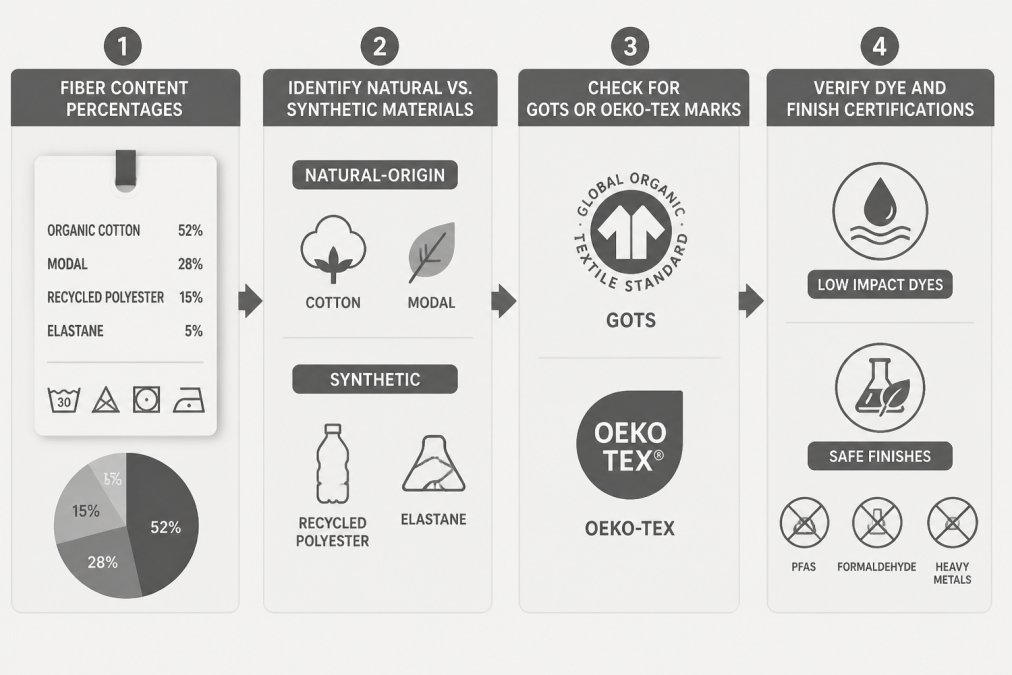
Fiber Content and Composition
The fiber content percentage is your first stop. Look for the exact breakdown, 95% viscose from bamboo and 5% elastane tells you exactly what you're wearing. If a label just says "bamboo" or "performance fabric," that's vague and worth questioning.
Natural fibers: organic cotton, organic hemp, linen, wool. Regenerated cellulosics: viscose, lyocell, modal. Synthetics: polyester, nylon, spandex, elastane. The label must list these by percentage.
Red flag: if the label doesn't specify fiber percentages clearly, you can't verify what you're buying.
Certification Marks That Signal Safety
Certification marks tell you that a third party has tested the fabric against specific safety standards. The most relevant for chemical-free activewear:
- GOTS (Global Organic Textile Standard): Made with GOTS certified organic cotton. This covers fiber production and processing, including dye and finish restrictions. You'll see this on organic cotton products.
- OEKO-TEX STANDARD 100: Made with OEKO-TEX STANDARD 100 certified fabric. This means the fabric was tested against limits for harmful substances. Class I (the highest level) means testing against limits used for baby articles, the strictest standard. Our Athletic Tee uses OEKO-TEX certified dyes, ensuring the finished shirt is free from harsh chemical residues.
These certifications aren't perfect, but they represent third-party verification. A brand claiming chemical-free without certification is making an unverified claim.
Red Flags on Labels
Watch for vague language: "eco-friendly," "sustainable," "natural blend" without specifics. These words mean nothing without certification or transparent fiber breakdown.
Avoid products that claim antibacterial or odor-resistant properties from bamboo or plant materials. Those properties don't survive the viscose processing.
Also question "performance" claims without explanation. "Moisture-wicking" usually means synthetic fiber or chemical finish. "Breathable" is vague, most natural fibers breathe. Specificity matters.
Dyes, Finishes, and Chemical Processing in Activewear
How your clothes are dyed and finished matters as much as the fiber itself. Standard textile processing uses azo dyes, heavy metals, and chemical finishes that can remain in the fabric.
Chemical-free activewear uses certified dyes and avoids heavy metal dyes and azo compounds. OEKO-TEX certified dyes meet safety limits for harmful substances.
The finishing process also matters. Standard polyester activewear gets fluorinated water-repellent finishes (PFAS), formaldehyde-based wrinkle resistance, and softening agents.
Our Athletic Tee is dyed using OEKO-TEX certified dyes, helping ensure the finished shirt is free from harsh chemical residues. No fluorinated finishes, no heavy metal dyes.
Performance Expectations: What Chemical-Free Activewear Can and Cannot Do
Chemical-free athletic wear performs differently than synthetic performance wear. Understanding those differences prevents disappointment.
What it does well: breathes naturally, feels soft against skin, handles moderate sweat, and doesn't require chemical finishes to feel comfortable.
For everyday wear, running, yoga, gym sessions under moderate intensity, and outdoor activity, chemical-free materials perform well. For competitive athletics or extreme conditions, synthetic performance wear still has advantages.
The real question isn't performance, it's whether you're willing to accept slightly different performance characteristics to reduce chemical exposure. Most people find the trade-off worthwhile.
Making the Switch: Care and Longevity
Switching to chemical-free activewear means adjusting how you wash and care for your clothes.
Organic cotton and viscose from bamboo benefit from cold water washing and air drying.
Avoid fabric softeners and bleach. Both add chemical coatings that defeat the purpose of chemical-free clothing.
Pilling is less common with well-constructed pieces, but it happens. A fabric shaver handles it easily.
Storage: fold rather than hang to prevent stretching, and store in a cool, dry place.
The durability question comes down to construction quality.
Chemical-free athletic wear isn't about perfect purity, it's about intentional choices.
Mellow Mile's Athletic Tee represents this approach: 95% viscose from bamboo with 5% elastane, dyed with OEKO-TEX certified dyes, and designed for everyday wear and moderate workouts. It's soft, breathable, and free from the chemical finishes that most athletic brands rely on. Get started with Mellow Mile and experience the difference of clothing designed with your health in mind.
Frequently Asked Questions
What does chemical-free athletic wear actually mean?
Chemical-free athletic wear refers to workout clothes made without synthetic chemical finishes, heavy dyes, or per- and polyfluoroalkyl substances (PFAS). It prioritizes materials like organic cotton or viscose from bamboo, combined with minimal chemical processing. No clothing is entirely chemical-free, but this category focuses on reducing unnecessary synthetic treatments and using certified, tested fabrics to minimize skin exposure.
How can I tell if workout clothes contain PFAS?
PFAS are rarely listed on labels because they're part of water-resistant finishes applied during manufacturing. Look for certifications like OEKO-TEX STANDARD 100, which tests for harmful substances including PFAS residues. Check the fiber content: polyester and nylon are more likely to carry PFAS treatments than organic cotton or viscose from bamboo. Contact the brand directly and ask for third-party testing results if the label doesn't list certifications.
Are natural-fiber workout clothes suitable for intense exercise?
Yes, with realistic expectations. Organic cotton and viscose from bamboo breathe well and wick moisture, making them comfortable during workouts. They may not dry as quickly as pure polyester, but many athletes find the trade-off worthwhile for reduced chemical exposure. For high-intensity or endurance activities, blends that combine natural fibers with a small amount of elastane (like viscose from bamboo with 5% elastane) provide stretch and durability without relying heavily on synthetic fabrics.
What should I look for on an activewear label to verify it's truly chemical-free?
Check for: (1) fiber content showing organic cotton, viscose from bamboo, lyocell, or hemp rather than polyester or nylon; (2) certifications like OEKO-TEX STANDARD 100 or GOTS for organic cotton; (3) transparency about dyes and finishes; (4) absence of water-resistant or stain-guard claims, which often indicate PFAS treatment. Brands that disclose their supply chain and testing results are more trustworthy than those making vague 'clean' claims without evidence.
Will switching to chemical-free athletic wear really make a difference for sensitive skin?
For many people, yes. Skin irritation from activewear often stems from synthetic chemical finishes, azo dyes, or harsh processing agents rather than the base fiber itself. Switching to certified, minimally processed fabrics can reduce itching, rashes, and irritation, especially during prolonged wear or in warm conditions when sweat increases skin contact. Results vary by individual sensitivity, but customers report noticeable improvements after making the switch.
How do I know a brand's PFAS-free claim is real?
Legitimate claims are backed by third-party testing, certifications, or detailed supply chain documentation. Look for OEKO-TEX STANDARD 100 certification, which independently tests fabric for harmful substances. Ask the brand for test reports or certifications before buying. Be skeptical of unqualified 'clean' or 'non-toxic' claims without supporting evidence. Brands committed to transparency will provide specifics about materials, certifications, and manufacturing practices.
What's the difference between viscose from bamboo and organic cotton for athletic wear?
Organic cotton is a natural fiber grown without synthetic pesticides, making it better than conventional cotton. Viscose from bamboo is a regenerated cellulosic fiber made through chemical processing, so it's semi-synthetic. Both can be soft and breathable for workouts. Viscose from bamboo often feels lighter and silkier, while organic cotton is more durable and familiar. Both require certifications to ensure they're processed safely and free from harmful chemical residues.