


Benefits of Non-Toxic Workout Gear for Men
Table of Contents
- What Non-Toxic Workout Gear Actually Means
- How Synthetic Fabrics and Chemical Finishes Affect Your Skin
- The Real Health Benefits of Non-Toxic Workout Gear
- Best PFAS-Free Athletic Clothing Brands and What to Look For
- Understanding OEKO-TEX STANDARD 100 Certified Fabric Benefits
- Organic Cotton vs. Viscose from Bamboo: Which Performs Better
- Making the Switch: Why Durability and Cost Matter
- Frequently Asked Questions
Last Updated: October 7, 2026
What Non-Toxic Workout Gear Actually Means
Non-toxic workout gear is athletic clothing designed and manufactured to minimize your skin's exposure to synthetic chemical finishes, heavy metals, and harmful residues during physical activity. Standard activewear relies heavily on polyester and synthetic treatments that introduce chemicals into direct contact with your skin during the hours when your pores are most open.
Most conventional workout apparel undergoes chemical finishing processes that include PFAS (per- and polyfluoroalkyl substances), phthalates, and heavy metal dyes. These finishes create the moisture-wicking and stretch properties consumers expect. Non-toxic workout gear replaces these synthetics with organic cotton or regenerated fibers like viscose from bamboo, paired with certifications that verify what's been removed during manufacturing.
At Mellow Mile, our Athletic Tees and Organic Cotton Boxers are built on a simple principle: performance shouldn't require chemical compromise.

How Synthetic Fabrics and Chemical Finishes Affect Your Skin
Polyester and synthetic blends dominate activewear because they stretch, dry quickly, and wick sweat. To achieve these properties, synthetic fabrics are treated with chemical finishes that remain embedded in the fibers even after you purchase the garment.
When you exercise, your body temperature rises and your pores open. Sweat increases skin permeability, so synthetic chemical finishes, PFAS coatings, phthalate-based dyes, and heavy metal residues transfer most easily into your system. A casual walk poses lower risk than a high-intensity workout where sweat production and skin absorption peak simultaneously.
Ben S., one of our customers, described it perfectly: "I have sensitive skin and most workout shirts leave me itchy by the end of the day. Not this one. Zero irritation."
Breathability suffers too. Synthetic gear often feels clingy during intense exercise even though it's marketed as "moisture-wicking."
The Real Health Benefits of Non-Toxic Workout Gear
Reduced Chemical Exposure During Intense Exercise
Switching to non-toxic workout gear eliminates the primary pathway for synthetic chemical transfer during the moments your body is most vulnerable. Wearing organic cotton or viscose from bamboo instead of polyester removes PFAS coatings, phthalate-based dyes, and heavy metal residues from direct skin contact during exercise.

Certifications verify this removal. Fabric made with OEKO-TEX STANDARD 100 certified fabric has been tested and confirmed free from regulated harmful substances, including heavy metals, formaldehyde, and restricted azo dyes, backed by third-party laboratory testing.
Better Breathability and Moisture Management
Organic cotton and viscose from bamboo manage moisture without creating the clingy, trapped-heat sensation polyester produces.
During a workout, your body's cooling system functions more efficiently when fabric allows sweat to evaporate rather than pool against your skin. Tyler W., one of our customers, noted: "Doesn't hold smell like my polyester stuff. Did a double gym session and it still smelled fine."
The difference becomes obvious in high humidity. Marcus T. ran 6 miles in August humidity wearing our Athletic Tee and reported: "Didn't cling to me at mile 4 like my usual shirts do."
Improved Skin Health and Reduced Irritation
The most immediate benefit users report is the elimination of irritation, which appears within days of switching, not weeks.
Organic cotton and viscose from bamboo allow your skin to maintain its natural pH balance and microbiome. Ben S. experienced this directly: "I have sensitive skin and most workout shirts leave me itchy by the end of the day. Not this one. Zero irritation." The difference is the absence of chemical irritants, not a special ingredient.
Best PFAS-Free Athletic Clothing Brands and What to Look For
When evaluating PFAS-free athletic clothing, focus on three measurable factors: fiber composition, certification standards, and manufacturing transparency.
Fiber composition matters most. Look for organic cotton or high-percentage viscose from bamboo blends. If a brand doesn't clearly state fiber content on the product page, that's a red flag.
Certifications provide third-party verification. Fabric made with OEKO-TEX STANDARD 100 certified fabric has been tested and confirmed free from harmful substances. GOTS certification for organic cotton verifies the cotton was grown without synthetic pesticides and processed according to strict environmental standards.
Manufacturing transparency reveals whether a brand controls the process or simply sources finished fabric. Brands that detail their dyeing and finishing methods are more likely to maintain non-toxic standards throughout production.
Mellow Mile meets all three criteria. Our Athletic Tees are crafted from 95% viscose from bamboo with 5% elastane, and the fabric is dyed using OEKO-TEX® certified dyes. Our Organic Cotton Boxers are made with GOTS certified organic cotton and dyed with OEKO TEX certified dyes.
Understanding OEKO-TEX STANDARD 100 Certified Fabric Benefits
OEKO-TEX STANDARD 100 is an independent testing and certification system that verifies fabric is free from harmful substances, testing for over 100 regulated and restricted chemicals including heavy metals, phthalates, formaldehyde, and PFAS compounds.
Fabric samples are sent to accredited laboratories and tested against strict chemical limits. If the fabric passes, it receives OEKO-TEX STANDARD 100 certification, which must be renewed annually.
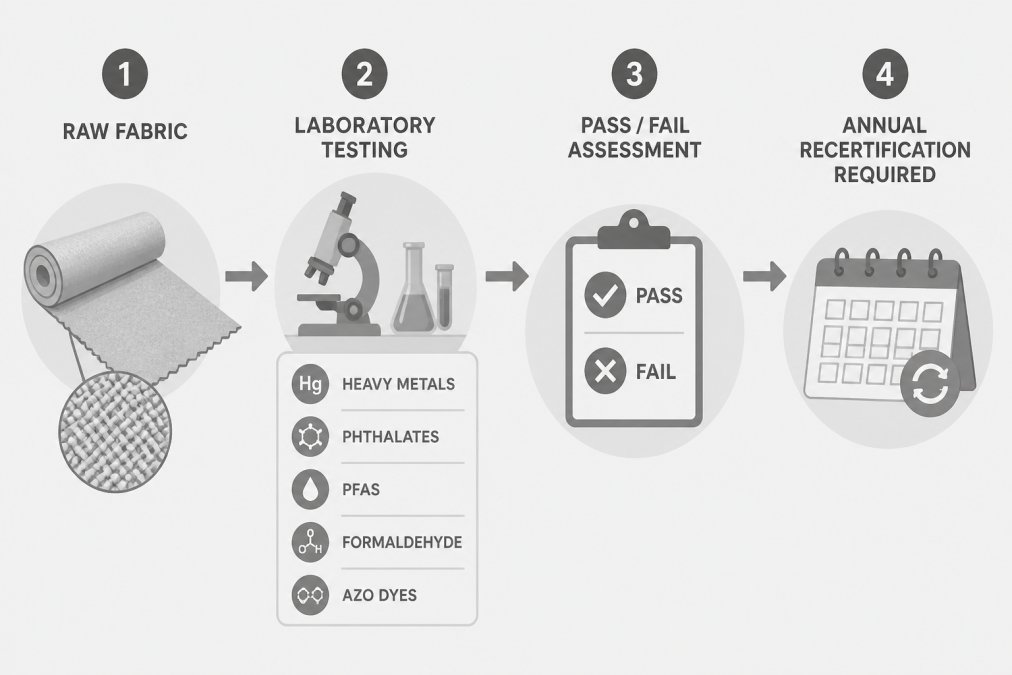
Class I is the highest level within OEKO-TEX STANDARD 100, meaning the fabric was tested against limits designed for baby articles, the most stringent category.
The practical benefit: when you buy fabric labeled OEKO-TEX STANDARD 100 certified, you have independent verification that harmful substances have been removed or never present. This is why certification matters more than brand promises. A brand can claim anything; certification requires proof.
Organic Cotton vs. Viscose from Bamboo: Which Performs Better
Organic cotton and viscose from bamboo represent different approaches to non-toxic activewear, each with distinct performance characteristics.
Organic cotton is a natural fiber grown without synthetic pesticides or fertilizers. It's naturally breathable, durable, and improves with washing. The fiber has inherent strength, meaning garments maintain their structure through hundreds of wash cycles. Organic cotton is hypoallergenic and works well for sensitive skin. The trade-off: it absorbs and retains moisture more readily than viscose from bamboo, which can feel heavier during intense sweating.
Viscose from bamboo is a regenerated cellulosic fiber made through chemical processing. It's lighter than organic cotton, offering superior moisture-wicking and breathability. During high-intensity workouts, viscose from bamboo keeps you cooler because it moves moisture away from skin more efficiently. The fiber also has a silky feel that many prefer against the skin. The consideration: viscose from bamboo requires more careful laundering to maintain durability, and it's not a natural fiber, it's a semi-synthetic material created through controlled manufacturing.
For workout gear specifically, viscose from bamboo offers superior moisture management during intense exercise. Our Athletic Tees use 95% viscose from bamboo with 5% elastane for stretch, creating a shirt that breathes exceptionally well while maintaining durability. For everyday wear and underwear, organic cotton's durability and natural properties make it ideal, which is why our Organic Cotton Boxers use GOTS certified organic cotton.
The choice depends on your use case. High-intensity workouts benefit from viscose from bamboo's superior moisture management. Daily wear and sensitive-skin applications favor organic cotton's natural properties and proven durability.
Making the Switch: Why Durability and Cost Matter
The upfront cost of non-toxic workout gear is higher than conventional synthetic alternatives. This reflects genuine differences in materials and manufacturing.
Organic cotton and viscose from bamboo cost more to source than polyester. GOTS and OEKO-TEX certifications add verification costs. Small-batch production means less economies of scale compared to massive synthetic apparel manufacturers. These aren't hidden markups, they're transparent cost factors.
The durability calculation changes the equation. Non-toxic gear lasts longer than synthetic alternatives because natural and regenerated fibers maintain their integrity through repeated washing and wearing. Jake R. reported: "Softest shirt I own, and I've tried a lot of the 'premium' brands. Fits true to size, not boxy." After multiple wash cycles, the garment remains soft and maintains its shape.
Nate G. observed: "Washed it with jeans by accident, no pilling. Drape is still good." Synthetic fabrics pill and degrade faster because the fibers break down under stress.
The cost-per-wear calculation favors non-toxic gear. If a non-toxic shirt costs $44 and lasts 200+ wears, the cost-per-wear drops to $0.22.
Brandon E. confirmed this: "Three months of heavy rotation and the elastic still feels new. My last brand was stretched out by month two." Non-toxic gear maintains its performance properties.
| Factor | Synthetic Activewear | Non-Toxic Gear |
|---|---|---|
| Upfront Cost | Lower | Higher |
| Expected Lifespan | 40-60 wears | 200+ wears |
| Cost Per Wear | $0.42-$0.63 | $0.22-$0.44 |
| Skin Irritation Risk | Higher | Minimal |
| Breathability | Moderate | Superior |
| Durability After 50 Washes | Degraded | Maintained |
Making the switch to non-toxic workout gear isn't about choosing a trend, it's about choosing what actually works better for your body and your long-term costs. The health benefits are immediate: reduced irritation, better breathability, and genuine comfort. The durability means you're investing in gear that performs consistently over hundreds of wears.
At Mellow Mile, we've built our entire approach around this principle. Our Athletic Tees made with viscose from bamboo and OEKO-TEX certified dyes deliver the performance you need without the chemical exposure. Our Organic Cotton Boxers with GOTS certification provide the comfort and durability that make them worth the investment. Both are designed with the understanding that your health matters more than cutting costs on materials.
Start with one piece, a single Athletic Tee or pair of Organic Cotton Boxers, and experience the difference yourself. You'll notice the breathability immediately, the comfort within days, and the durability over months. That's when the real value becomes obvious. Get started with Mellow Mile and discover what non-toxic activewear actually feels like.
Frequently Asked Questions
What makes non-toxic workout gear different from regular athletic clothing?
Non-toxic workout gear eliminates synthetic chemical finishes like PFAS, phthalates, and heavy metals found in many performance fabrics. Instead of relying on polyester and harsh chemical treatments, non-toxic options use natural fibers like organic cotton or regenerated cellulosics like viscose from bamboo, often certified through third-party testing like OEKO-TEX STANDARD 100. The difference shows up in reduced skin irritation, better breathability, and lower overall chemical exposure during workouts and daily wear.
How does OEKO-TEX STANDARD 100 certification protect me?
OEKO-TEX STANDARD 100 certification means the finished fabric has been independently tested against strict limits for harmful substances including heavy metals, formaldehyde, phthalates, and other chemical residues. The testing is conducted by accredited laboratories and verifies that what touches your skin is free from toxic compounds. This certification provides third-party verification that goes beyond marketing claims, giving you documented proof of safety.
Will switching to non-toxic workout gear actually improve my skin health?
Many men experience noticeable improvements after switching. Natural fibers and those free from harsh chemical finishes allow better airflow, reduce skin contact with irritants, and minimize reactions. Customers report zero irritation during workouts, less odor retention, and improved comfort during long wear.
Are non-toxic workout clothes durable enough to justify the cost?
Quality non-toxic gear is built to last. Organic cotton and viscose from bamboo, when properly constructed, maintain their elasticity and integrity through repeated washing and intense use. The durability means you buy less frequently, offsetting the higher initial cost per garment.