


How to Choose Organic Cotton Essentials for Sensitive Skin Workouts
Last Updated: October 25, 2026
Quick Summary
Organic cotton workout clothes work for sensitive skin because they absorb moisture naturally without chemical coatings, keeping sweat from pooling while minimizing friction and chemical exposure during your workout. Look for pieces made with GOTS certified organic cotton or OEKO-TEX STANDARD 100 certified fabric, with flat seams and thoughtful fit to reduce chafing.
- Organic cotton absorbs sweat and releases it gradually without chemical finishes, unlike synthetic blends that trap heat and cling to skin.
- GOTS certification confirms organic cotton was grown without synthetic pesticides and processed without harsh chemicals.
- OEKO-TEX STANDARD 100 Class I certification means the finished fabric was tested to the same limits used for baby articles.
- Flat seams, soft waistbands, and snug-but-not-tight fit reduce friction and chafing during workouts.
- Wash in cold water with gentle detergent, avoid fabric softeners, and air dry to preserve breathability and softness.
Table of Contents
- Why Organic Cotton Workout Clothes Matter for Sensitive Skin
- Best Fabric for Itchy Skin: Understanding Your Material Options
- Breathable Workout Fabrics: Moisture Management Without Irritation
- What to Look for: Certifications and Construction Details
- How to Wash Clothes for Sensitive Skin: Care Routine Essentials
- Building Your Sensitive-Skin Workout Wardrobe
- Getting Started with Your First Organic Cotton Purchase
- Frequently Asked Questions
Why Organic Cotton Workout Clothes Matter for Sensitive Skin
If you have sensitive skin, every fabric choice matters. Most workout gear relies on synthetic materials and chemical finishes that trap heat, cling when you sweat, and leave your skin irritated by mile three. Organic cotton workout clothes work differently because they start with a cleaner foundation.
At Mellow Mile, we've built our entire collection around this principle: your skin shouldn't have to fight your clothing. When you're pushing hard in a workout, the last thing you need is fabric that makes you itch, chafe, or feel uncomfortable. The right materials can mean the difference between a workout you enjoy and one you endure.
The key insight most guides miss is that "breathable" and "moisture-wicking" aren't the same thing, and for sensitive skin, one matters far more than the other. Organic cotton takes a different approach: it absorbs moisture naturally without relying on chemical coatings, which means less irritant exposure and less skin stress during and after your workout.
Best Fabric for Itchy Skin: Understanding Your Material Options
When your skin is sensitive, the fabric touching it becomes a medical decision, not a style choice. The materials you choose determine whether you finish a workout feeling good or scratching for hours afterward.
Organic Cotton vs. Synthetic Blends
Organic cotton is a natural fiber grown without synthetic pesticides or fertilizers. It breathes naturally, absorbs sweat without chemical enhancement, and feels soft against sensitive skin from the first wear. Most importantly, it doesn't rely on synthetic treatments to perform.
Synthetic blends, polyester, nylon, and spandex combinations, are engineered for performance: they wick moisture, dry fast, and resist wrinkles. Learn why synthetic fabrics cause the skin irritation you're trying to avoid. But they achieve this through chemical finishes and plastic-based fibers. When you sweat, these materials trap heat and cling to your skin. For sensitive skin, this combination often triggers itching, rashes, or heat irritation.
The real difference comes down to what happens when you sweat. Organic cotton absorbs moisture and releases it gradually, keeping your skin dry without chemical intervention.
Viscose from Bamboo and Other Alternatives
Viscose from bamboo is a regenerated cellulosic fiber made through chemical processing. It's softer than many synthetics and breathes better than polyester, but it's not a natural fiber. The bamboo plant's properties don't survive the viscose production process. For sensitive skin, viscose from bamboo can work.
Other alternatives like merino wool and TENCEL (lyocell) each have trade-offs. Merino wool regulates temperature naturally and resists odor, but it's heavier and less ideal for high-intensity workouts in warm weather. TENCEL is a closed-loop fiber that uses less water than viscose production, but it still requires chemical processing.
For most people with sensitive skin, organic cotton remains a predictable choice. It has fewer synthetic treatments applied afterward, and a long history of skin compatibility.
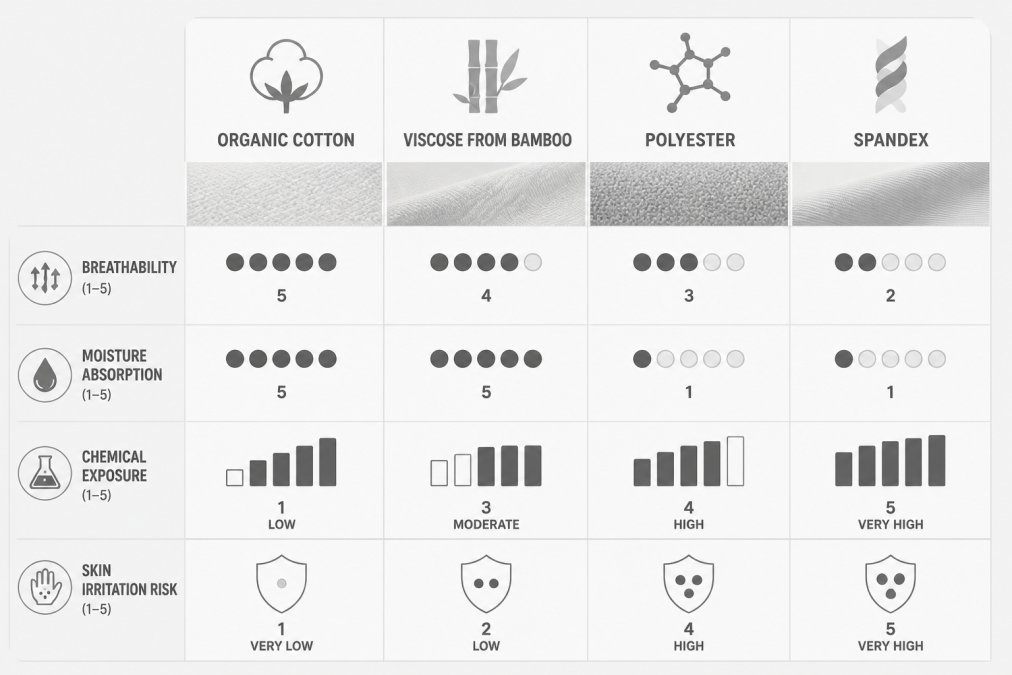
Here's how the main fabric options compare for sensitive skin during workouts.
| Fabric | How it manages moisture | Best for sensitive skin? |
|---|---|---|
| Organic cotton | Absorbs sweat, releases gradually without chemicals | Yes, predictable choice |
| Synthetic blends (polyester, nylon, spandex) | Wicks moisture via chemical finishes, traps heat | No, often triggers irritation |
| Viscose from bamboo | Breathes better than polyester, softer than synthetics | Can work, requires chemical processing |
| Merino wool | Regulates temperature, resists odor | Less ideal for high-intensity warm workouts |
| TENCEL (lyocell) | Breathes well, uses less water than viscose | Works, but still requires chemical processing |
Breathable Workout Fabrics: Moisture Management Without Irritation
Breathability isn't just about feeling cool, it's about managing sweat in a way that doesn't irritate your skin. The wrong approach to moisture management can actually make sensitive skin worse.
True breathability means air can move through the fabric and heat can escape. Organic cotton achieves this through its natural fiber structure. The fibers have a hollow core that allows air circulation. When you sweat, the fabric absorbs moisture and releases it into the air rather than trapping it against your skin.
Synthetic fabrics marketed as "moisture-wicking" work differently. They're designed to pull sweat away from your skin and move it to the outer surface of the fabric, where it evaporates.
Moisture absorption (what organic cotton does) keeps sweat closer to your skin but in a gentler way. The fabric acts as a buffer, releasing moisture gradually.
For sensitive skin, comfort during the workout matters more than how fast the fabric dries afterward. You want a material that keeps sweat from pooling while minimizing friction and chemical exposure.
What to Look for: Certifications and Construction Details
When you're shopping for organic cotton workout clothes, certifications tell part of the story, but construction details tell the rest. A certified organic cotton shirt with cheap seams and a rough waistband will still irritate your skin.
GOTS and OEKO-TEX Certifications Explained
GOTS (Global Organic Textile Standard) certifies that organic cotton was grown without synthetic pesticides and processed without harsh chemicals. When you see "made with GOTS certified organic cotton," it means the fiber itself meets strict standards.
OEKO-TEX STANDARD 100 certification tests the finished fabric against strict limits for harmful substances (OEKO-TEX® STANDARD 100). Made with OEKO-TEX STANDARD 100 certified fabric means the garment has been tested and confirmed to be free from a long list of regulated chemicals. Class I testing (the highest level) uses limits designed for baby articles, so if a shirt carries Class I certification, you know it's been tested to the most stringent standard available.
Both certifications matter, but they measure different things. GOTS focuses on how the cotton was grown and processed. OEKO-TEX focuses on what's in the finished product.
Seams, Waistbands, and Fit for Friction Reduction
The fabric is only part of the equation. Seams, waistbands, and overall fit determine whether the garment causes chafing and friction irritation during your workout.
Flat seams reduce friction compared to standard seams. They sit flatter against your skin and don't create pressure points that rub and irritate. Look for garments where seams are reinforced but not bulky, you want durability without the bulk that causes chafing.
Waistbands are a common irritation point. A tight, elastic-heavy waistband digs into your skin and creates friction during movement. Better waistbands distribute pressure evenly, use softer elastic, and sit comfortably without rolling or sliding. When trying on workout clothes, the waistband should feel like nothing is there, not like something is holding you in place.
Fit matters too. Clothes that are too tight create friction everywhere. Clothes that are too loose bunch and chafe. For sensitive skin, you want a fit that's snug enough to move with you but loose enough that fabric doesn't constantly rub against your skin.
How to Wash Clothes for Sensitive Skin: Care Routine Essentials
How you wash your organic cotton workout clothes affects how they perform and how they feel on your skin. The wrong washing routine can undo all the benefits of choosing the right fabric.
Wash in cold water with a gentle detergent. Hot water can damage organic cotton fibers and set in any remaining dyes or finishes. Gentle detergents (free from dyes, perfumes, and optical brighteners) protect both the fabric and your skin. Avoid fabric softeners and dryer sheets, they leave a coating that reduces breathability and can irritate sensitive skin.
Wash inside out to reduce pilling and fading. This also protects the outer surface of the garment from friction with other clothes. For how to wash organic cotton apparel, follow the specific care instructions on your garment's label, but the general principle is: less is more.
Air dry when possible. Machine drying can shrink organic cotton and damage the fibers. If you do use a dryer, use low heat. The gentler you are with the fabric, the longer it lasts and the softer it stays against your skin.
Building Your Sensitive-Skin Workout Wardrobe
Start with essentials and build from there. You don't need a massive collection, you need pieces that work together and feel good on your skin.
Essential Pieces for Different Activities
For running and cardio, you need a shirt that breathes, absorbs sweat, and doesn't chafe. The Athletic Tee made with 95% viscose from bamboo and 5% elastane gives you stretch without synthetic bulk. Pair it with organic cotton shorts or leggings. The combination keeps you cool while minimizing irritation.

For strength training and gym work, organic cotton boxers are your foundation. Most gym irritation comes from underwear that shifts, bunches, or clings. Organic Cotton Boxers made with GOTS certified organic cotton and OEKO-TEX certified dyes eliminate that problem.

For outdoor activities in warm weather, organic cotton remains a good bet.
For high-intensity workouts where you know you'll sweat heavily, the viscose from bamboo Athletic Tee works better than 100% cotton because it dries faster and doesn't get as heavy when wet. The trade-off is that viscose from bamboo requires more chemical processing than organic cotton.
The key is knowing your activity level and choosing accordingly. Don't assume organic cotton is always better, sometimes a small amount of elastane or a viscose blend performs better for your specific use case.
Getting Started with Your First Organic Cotton Purchase
Your first purchase should solve your biggest irritation problem. If your issue is underwear that shifts and causes chafing, start with boxers. If it's a shirt that leaves you itching by mid-workout, start with a single athletic tee.
Buy one piece, wear it through a full workout, and notice how your skin feels during and after. Pay attention to friction points, heat buildup, and any itching or irritation.
When you're ready to expand, add pieces that complement what you already own. If your first purchase was a tee, add matching shorts or leggings. If it was boxers, add a matching shirt.
The Athletic Tee and Organic Cotton Boxers are both made with certifications that matter: GOTS certified organic cotton or OEKO-TEX certified fabric, depending on the piece. Start with whichever addresses your most immediate irritation, then build from there.
Sensitive skin doesn't mean you have to accept discomfort during workouts. The right fabric, the right construction, and the right care routine can eliminate irritation you've been tolerating for years. Organic cotton workout clothes give you a foundation that doesn't fight your skin.
Frequently Asked Questions
What fabric is best for itchy skin during workouts?
Organic cotton is ideal for itchy skin because it's a natural fiber free from synthetic chemical finishes. Look for garments made with GOTS certified organic cotton, which ensures the fiber was grown without synthetic pesticides and processed without harsh dyes or chemical treatments. Viscose from bamboo is another option, though it's a regenerated cellulosic fiber made through chemical processing.
How do certifications like GOTS and OEKO-TEX help with sensitive skin?
GOTS certified organic cotton means the fiber was grown without synthetic pesticides. OEKO-TEX STANDARD 100 certification tests the finished fabric against strict limits for harmful substances. When shopping for organic cotton workout clothes, look for both certifications.
Will organic cotton workout clothes actually perform differently than synthetic ones?
Yes. Real customers report zero irritation after switching from synthetic blends, and noticing that organic cotton doesn't hold odor the way polyester does. The trade-off is slightly longer dry time, but the skin comfort gain is significant for sensitive skin.
How should I wash organic cotton clothes to keep them safe for sensitive skin?
Use a gentle, fragrance-free detergent and wash in cool water to preserve the fabric. Skip fabric softeners and dryer sheets. Air dry or use low heat to prevent shrinkage and maintain the fabric's breathability. Avoid bleach and optical brighteners. This simple routine keeps your organic cotton free from added chemicals and maintains its soft, non-irritating feel through repeated wear.
