


Best Men's Apparel for Sensitive Skin: A Buyer's Guide
Table of Contents
- Why Material Matters for Men's Apparel and Sensitive Skin
- Best Fabric for Sensitive Skin: Organic Cotton vs. Viscose from Bamboo
- Men's Clothing for Eczema: What to Look For
- Men's Undershirts for Sensitive Skin: Fit and Construction
- Dyes, Finishes, and Hidden Irritants in Apparel
- How to Wash Clothes for Sensitive Skin
- Common Mistakes to Avoid When Choosing Apparel
- Frequently Asked Questions
Last Updated: October 17, 2026
Why Material Matters for Men's Apparel and Sensitive Skin
The fabric touching your skin all day matters more than most men realize.
Most apparel today relies on synthetic blends and chemical finishes designed for performance metrics like moisture-wicking and durability. Those finishes can trigger irritation, itching, and rashes in people with reactive skin. Switching to the right material and construction can eliminate that problem.
The best men's apparel for sensitive skin starts with fiber choice. Natural and regenerated fibers like organic cotton and viscose from bamboo behave differently on skin than polyester or nylon blends. They breathe better, trap less heat, and don't hold onto irritating chemical residues the way synthetics do.

Beyond fiber, construction details matter. Seam placement, tag design, and how garments are dyed all influence whether clothing feels gentle or aggravating against sensitive skin.
Best Fabric for Sensitive Skin: Organic Cotton vs. Viscose from Bamboo
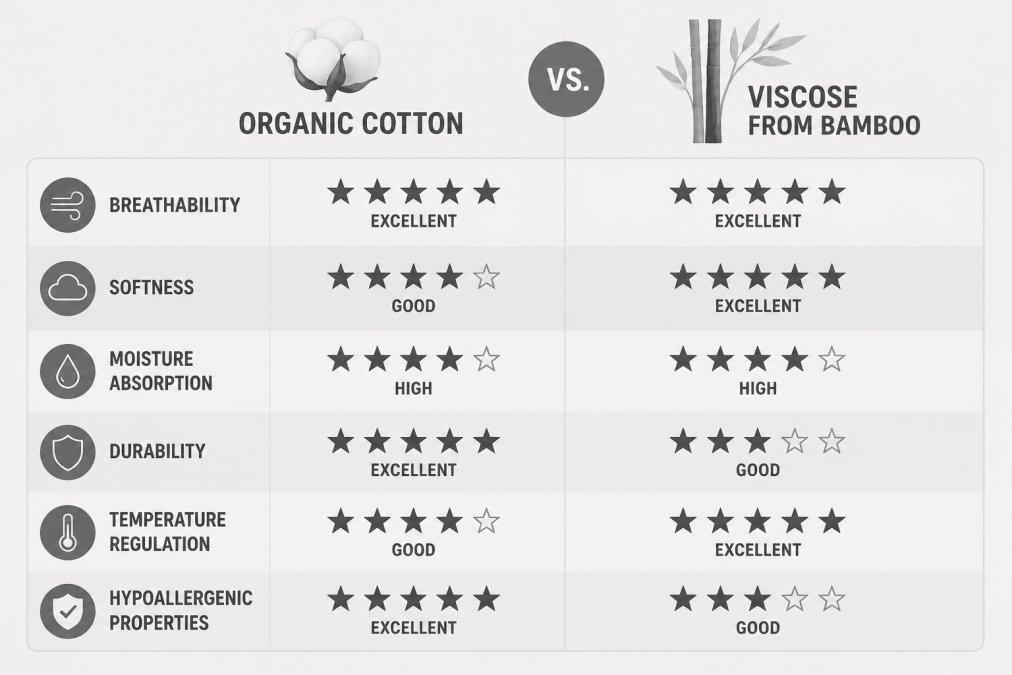
When choosing the best fabric for sensitive skin, two options stand out: organic cotton and viscose from bamboo. Both offer breathability and softness, but they work differently on your body and come with different trade-offs.
Organic Cotton: Breathable and Hypoallergenic
Organic cotton is a natural fiber grown without synthetic pesticides or fertilizers. It's the gold standard for sensitive skin because it's inherently hypoallergenic.
The key advantage: organic cotton is naturally soft and breathable without relying on chemical finishes. When made with GOTS certified organic cotton, the fiber has been verified to meet strict environmental and safety standards during production.
Organic cotton absorbs moisture well and allows air circulation, preventing the heat buildup that can trigger irritation in warm conditions.
The trade-off: organic cotton takes longer to dry than synthetic alternatives.
Our Organic Cotton Boxers are made with GOTS certified organic cotton and OEKO-TEX STANDARD 100 certified dyes, eliminating both fiber-based and finish-based irritants.
Viscose from Bamboo: Lightweight and Soft
Viscose from bamboo is a regenerated cellulosic, semi-synthetic fiber made through chemical processing. It's not a natural fiber, but it delivers exceptional softness and breathability for men's apparel sensitive skin concerns.
The manufacturing process transforms bamboo pulp into a smooth fiber that feels silky against the skin, making viscose from bamboo exceptionally soft and lightweight, ideal for warm weather and intense activity.
Viscose from bamboo breathes extremely well and regulates temperature effectively, and it dries faster than organic cotton.
When dyed with OEKO-TEX STANDARD 100 certified dyes, viscose from bamboo minimizes chemical irritants. The dye certification means the finished fabric was tested against strict limits for harmful substances, including those used for baby articles.
The trade-off: viscose from bamboo isn't as durable as organic cotton over extended wear. It can pill slightly with friction and may not hold up as long through repeated washing.
Our Athletic Tee is made from 95% viscose from bamboo with 5% elastane for stretch and durability. The elastane adds recovery so the shirt maintains its shape through workouts and washing. It's dyed with OEKO-TEX STANDARD 100 certified dyes to keep harsh chemicals away from your skin.

Men's Clothing for Eczema: What to Look For
Men with eczema need apparel that won't trigger flare-ups. The best men's clothing for eczema combines fiber choice with construction details that minimize friction and irritant exposure.
Start with fiber. Organic cotton and viscose from bamboo both work well because they're soft, breathable, and can be finished without harsh chemicals. Avoid polyester blends.
Seam placement matters significantly. Flat seams or seams placed on the outside of garments reduce friction against sensitive areas. Inseams on underwear should be soft and smooth, not rough or raised. Look for seamless or minimal-seam designs when possible.
Tags are often overlooked but cause real irritation. Men with eczema should seek tagless or soft-tag designs. Stiff labels rubbing against the back of your neck or waistband throughout the day can trigger eczema flare-ups even if the fabric itself is gentle.
Dye and finish matter as much as fiber. Look for garments dyed with OEKO-TEX STANDARD 100 certified dyes, which are tested against harsh chemical residues. Avoid "performance" finishes marketed for stain resistance or moisture-wicking.
Fit affects irritation too. Tight garments create friction and heat buildup. Loose, breathable fits allow air circulation and reduce rubbing. For men's clothing for eczema, comfort fit typically works better than slim or athletic fits.
Men's Undershirts for Sensitive Skin: Fit and Construction
An undershirt sits against your skin for hours. Poor fit or construction choices cause constant irritation. The best men's undershirts for sensitive skin prioritize comfort and minimize friction.
Fit is foundational. Undershirts should be snug enough to stay in place but loose enough to breathe. Look for crew neck or V-neck styles that don't constrict your chest or shoulders.
Sleeve length matters. Short sleeves shouldn't dig into your armpits, and long sleeves should move freely without binding at the wrists.
Waistband design directly affects comfort. Quality undershirts have waistbands that sit flat and maintain their shape through multiple washes.
Seam construction separates comfortable undershirts from irritating ones. Flat seams reduce friction compared to raised or overlocked seams. Some undershirts use seamless or minimal-seam construction on the sides and underarms, where friction is highest during movement.
Fabric weight matters for sensitive skin. Lightweight fabrics breathe better and feel less restrictive, while heavy, dense fabrics trap heat and moisture.
Our Organic Cotton Boxers demonstrate how construction reduces irritation. The waistband sits smoothly without rolling. Seams are positioned to minimize friction during movement. The fabric is lightweight organic cotton that breathes all day.
Dyes, Finishes, and Hidden Irritants in Apparel
Fiber choice is only part of the equation. The chemicals used to dye and finish apparel often trigger more irritation than the fiber itself.
Most conventional apparel goes through chemical treatments designed to improve performance. Water-repellent finishes, wrinkle-resistant treatments, and heavy dyes leave chemical residues on fabric.
Dyes are a major culprit. Conventional dyes require fixatives and mordants that don't always wash out completely.
Look for garments dyed with OEKO-TEX STANDARD 100 certified dyes. This certification means the finished fabric was tested against strict limits for harmful substances. The testing includes limits for heavy metals, formaldehyde, and other irritants. Class I testing, used for baby articles, represents the strictest standard.
Chemical finishes are another hidden irritant source. Stain-resistant treatments, antimicrobial finishes, and moisture-wicking coatings all involve chemical application.
Avoid apparel marketed with these finish claims: "antimicrobial," "odor-resistant," or "stain-resistant" unless the brand explicitly states the treatment method and confirms it doesn't use harsh chemicals.
PFAS (per- and polyfluoroalkyl substances) are used in water-repellent and stain-resistant finishes. They're persistent chemicals that accumulate in your body over time. For men prioritizing health, avoiding PFAS-treated apparel matters. Mellow Mile apparel is made without chemical finishes like PFAS, so you're not exposing your skin to these compounds daily.
Detergent residue compounds the problem. If garments aren't rinsed thoroughly after manufacturing, detergent and dye chemicals remain trapped in the fibers.
How to Wash Clothes for Sensitive Skin
How you care for apparel affects its irritation potential long-term. Washing mistakes can reintroduce irritants or damage fibers, making them rougher and more irritating.
Use cool water, not hot. Hot water can set dyes more firmly and cause shrinkage.
Choose fragrance-free, dye-free detergent. Conventional detergents contain dyes and perfumes that leave residues on fabric.
Avoid fabric softeners entirely. Fabric softeners coat fibers with wax-like residues designed to feel soft. Garments made from quality fibers like organic cotton or viscose from bamboo don't need softeners.
Don't overload the washing machine. Crowded loads don't rinse thoroughly, leaving detergent residue in fibers.
Rinse twice if possible. An extra rinse cycle removes detergent residue more completely. This extra step is worth it for sensitive skin.
Dry on low heat or hang dry. High heat can damage fibers and set any remaining dye or chemical residues. Low heat or air drying preserves fabric quality.
Don't use dryer sheets. Like fabric softeners, dryer sheets leave irritating residues. Hang dry or use low heat without additives.
Store clean apparel in a cool, dry place away from strong odors. Odor exposure can trigger sensitivity in some men. Keep your drawer clean and free from scented products.
Common Mistakes to Avoid When Choosing Apparel
Men shopping for sensitive skin apparel often make choices that seem logical but backfire.
Mistake 1: Assuming synthetic performance fabrics are better. Polyester and nylon blends dry quickly and resist wrinkles, but they trap heat and don't allow skin to breathe. For sensitive skin, performance comes second to comfort.
Mistake 2: Buying tight-fitting apparel. Athletic or slim-fit styles look good but create friction and heat buildup. For sensitive skin, comfort fit that allows movement without restriction works better. You'll feel better and experience less irritation.
Mistake 3: Ignoring seams and construction. A well-made shirt with flat seams and minimal friction points outperforms poorly constructed apparel made from quality fiber. Check seam placement before buying. Look for tagless or soft-tag designs.
Mistake 4: Overlooking dye and finish quality. Fiber matters, but chemicals matter more for sensitive skin.
Mistake 5: Buying apparel without washing first. New garments carry manufacturing residue. Wearing them straight from the package exposes your skin to detergent, dyes, and chemical finishes. Wash 2-3 times before wearing against sensitive skin.
Mistake 6: Choosing based on price alone. Cheaper apparel often uses lower-quality fibers, harsh dyes, and poor construction.
Mistake 7: Not considering your specific skin concern. Eczema requires different priorities than general sensitivity. Men with severe eczema need seamless or minimal-seam construction and the gentlest dyes. Men with mild sensitivity might prioritize breathability over construction details.
Choosing the right men's apparel for sensitive skin comes down to understanding what irritates your skin and making intentional choices about fiber, construction, and chemical exposure.
Organic cotton and viscose from bamboo, combined with thoughtful construction and chemical-free dyes, eliminate the irritation that synthetic blends and harsh finishes cause.
Start by replacing one piece at a time. Wear it for a week. Notice the difference. Sign up for 20% Off and experience the intentional difference of clothing designed with your health in mind.
Frequently Asked Questions
What fabrics are best for men with sensitive skin?
Organic cotton and viscose from bamboo are top choices. Organic cotton is a natural fiber grown without synthetic pesticides, making it hypoallergenic and breathable. Viscose from bamboo is a regenerated cellulosic fiber that feels soft and lightweight against the skin. Both allow moisture to move away from your body. Avoid synthetic polyester blends.
Can clothing dyes or finishes irritate sensitive skin?
Yes. Many conventional apparel manufacturers use chemical dyes and finishes. Look for garments made with OEKO-TEX STANDARD 100 certified dyes and finishes, which are tested against strict limits for harmful substances. This certification means the fabric has been tested against the same limits used for baby articles, providing an extra safety margin for sensitive skin.
How should you wash clothes for sensitive skin?
Use a gentle, fragrance-free detergent and avoid fabric softeners, which leave chemical residues on fibers. Wash in cool water on a delicate cycle to reduce friction and pilling. Rinse twice to remove all detergent residue. Air dry or use low heat to prevent shrinkage and reduce fiber stress. Avoid bleach and oxygen-based cleaners. Washing new garments before wearing them removes excess dyes and finishes.
Will organic cotton or viscose from bamboo actually feel different on my skin compared to polyester?
Yes. Organic cotton and viscose from bamboo are significantly softer and more breathable than polyester. They absorb moisture rather than trapping it, so your skin stays drier during workouts or daily wear. Polyester can feel stiff initially and tends to hold sweat. Many customers report that switching to these natural or regenerated fibers eliminates itching and discomfort that persisted with synthetic fabrics.